
Last updated September 20, 2026
Full 25-point door and opener safety check with every visit - springs, cables, rollers, tracks, and your LiftMaster or Chamberlain opener included
You get a price before we start. It does not change when the truck arrives.
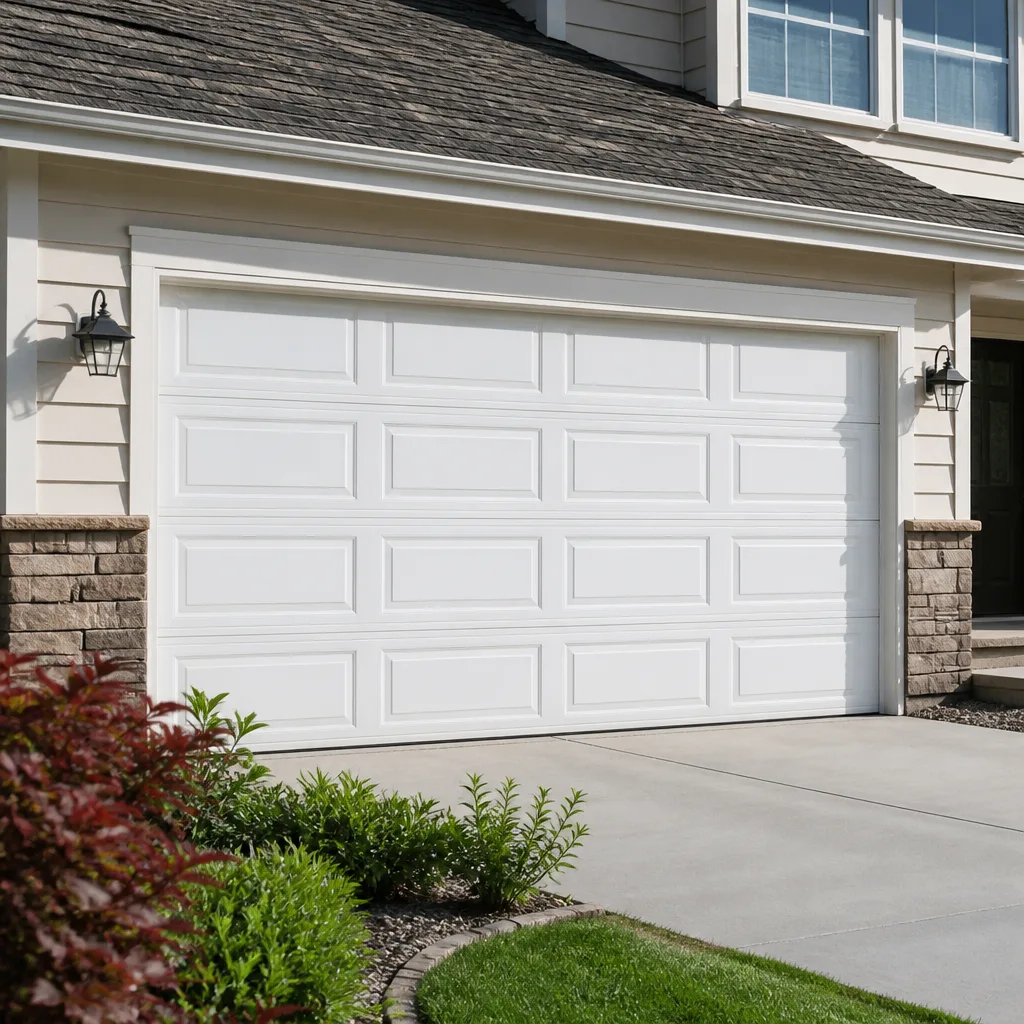
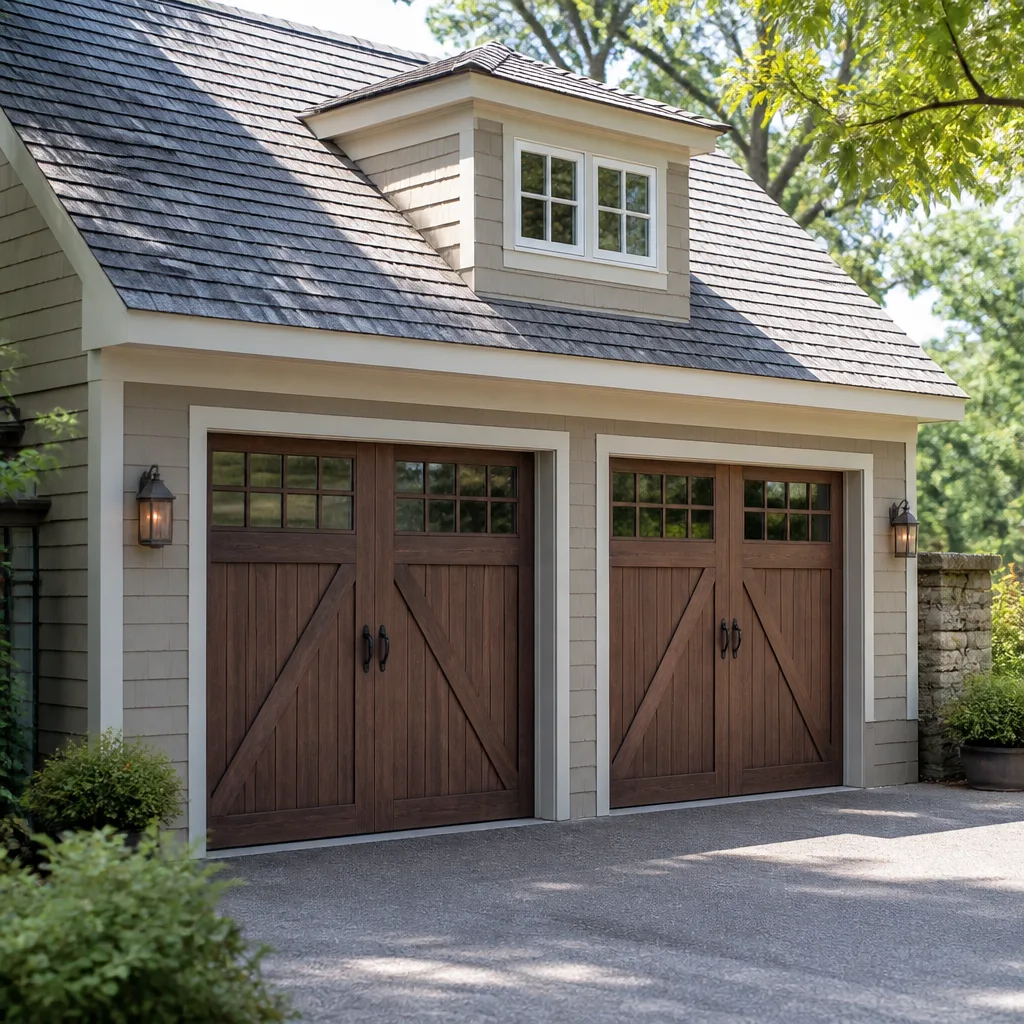
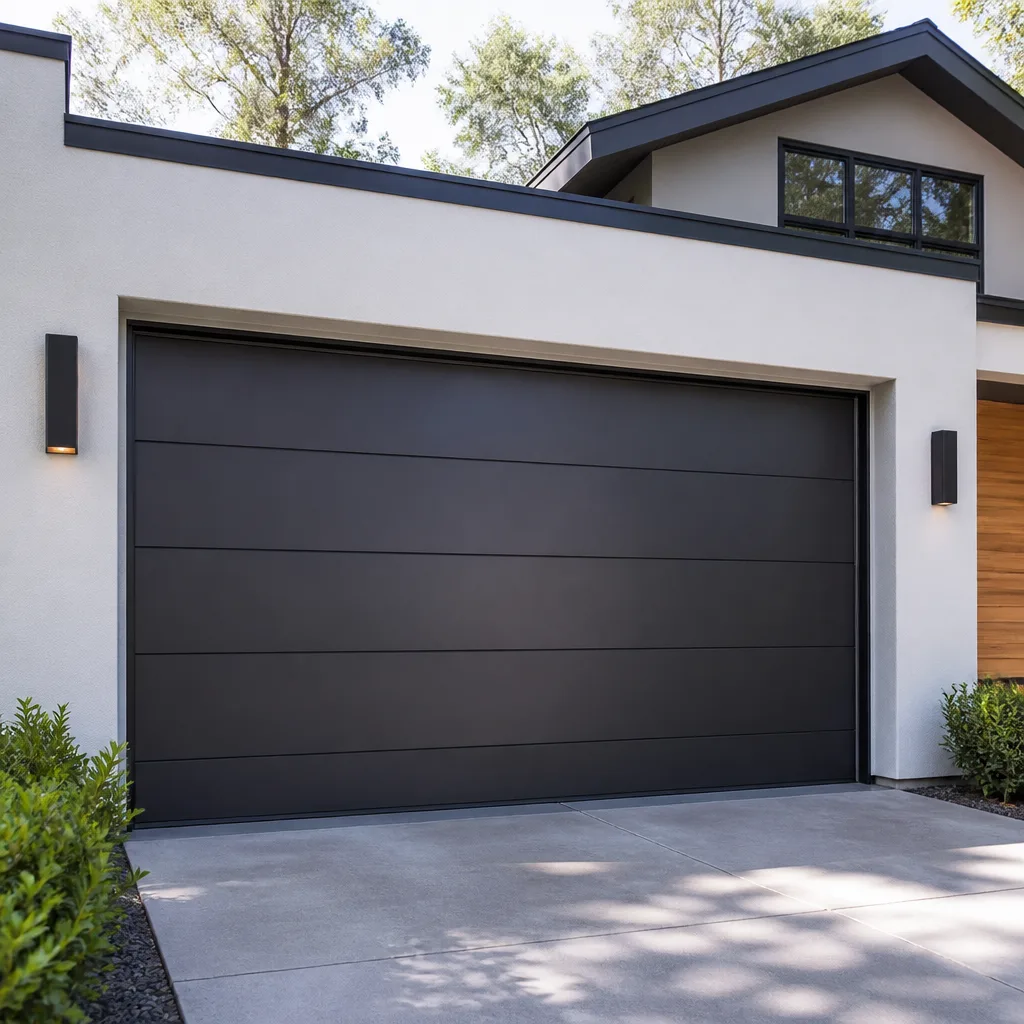
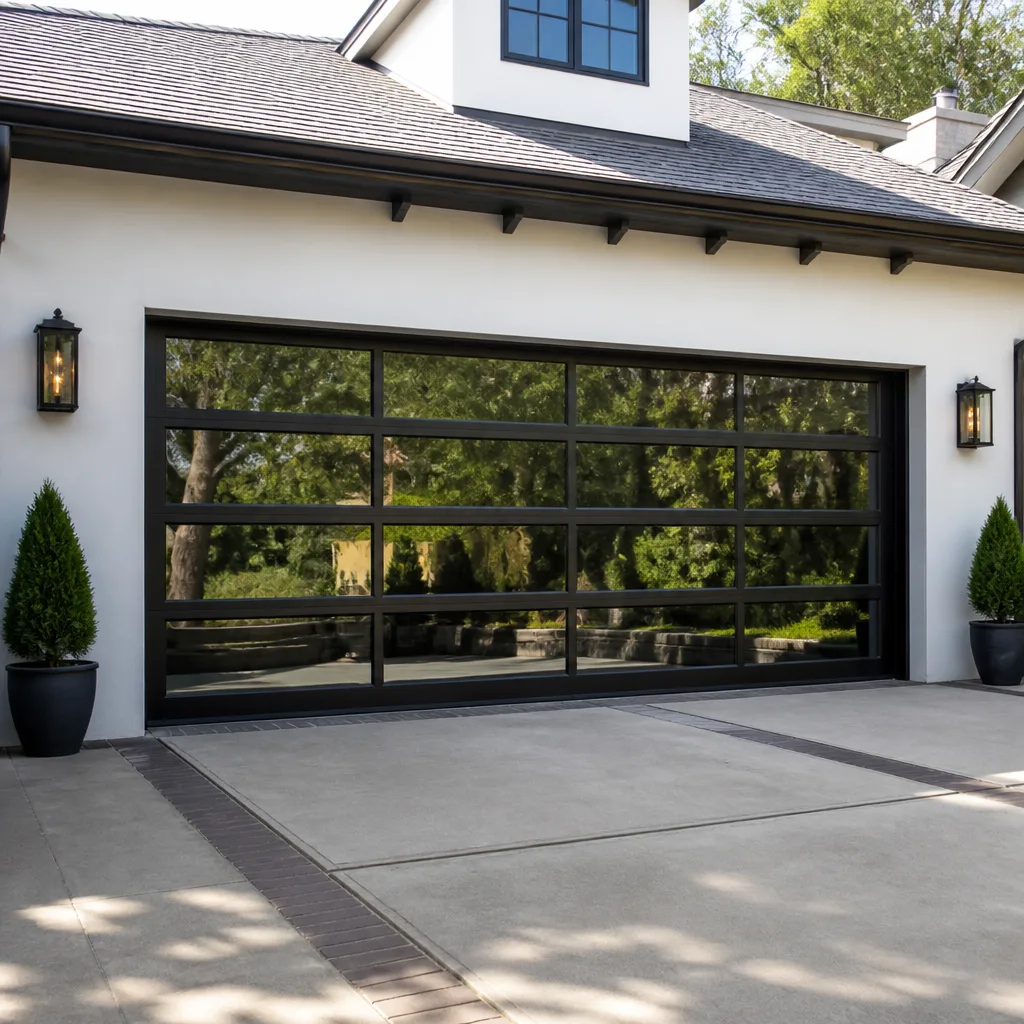
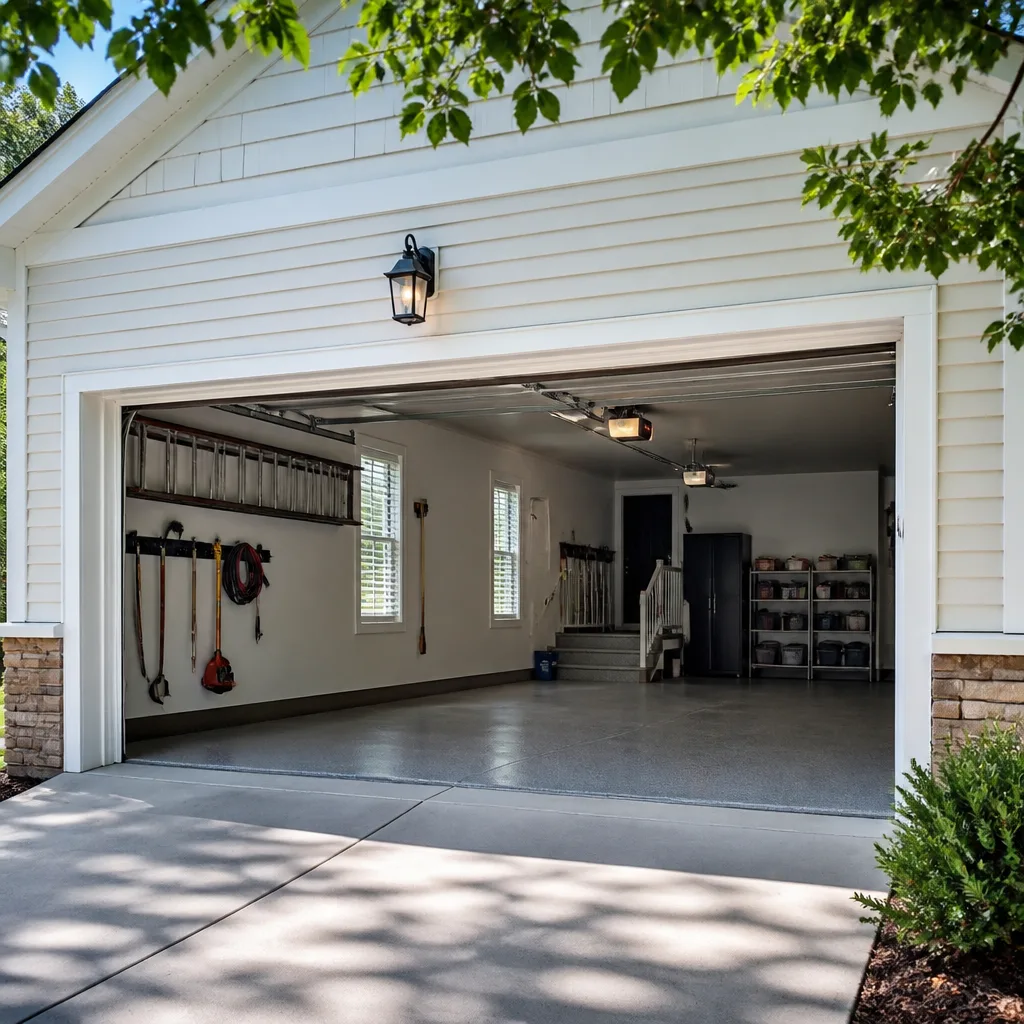
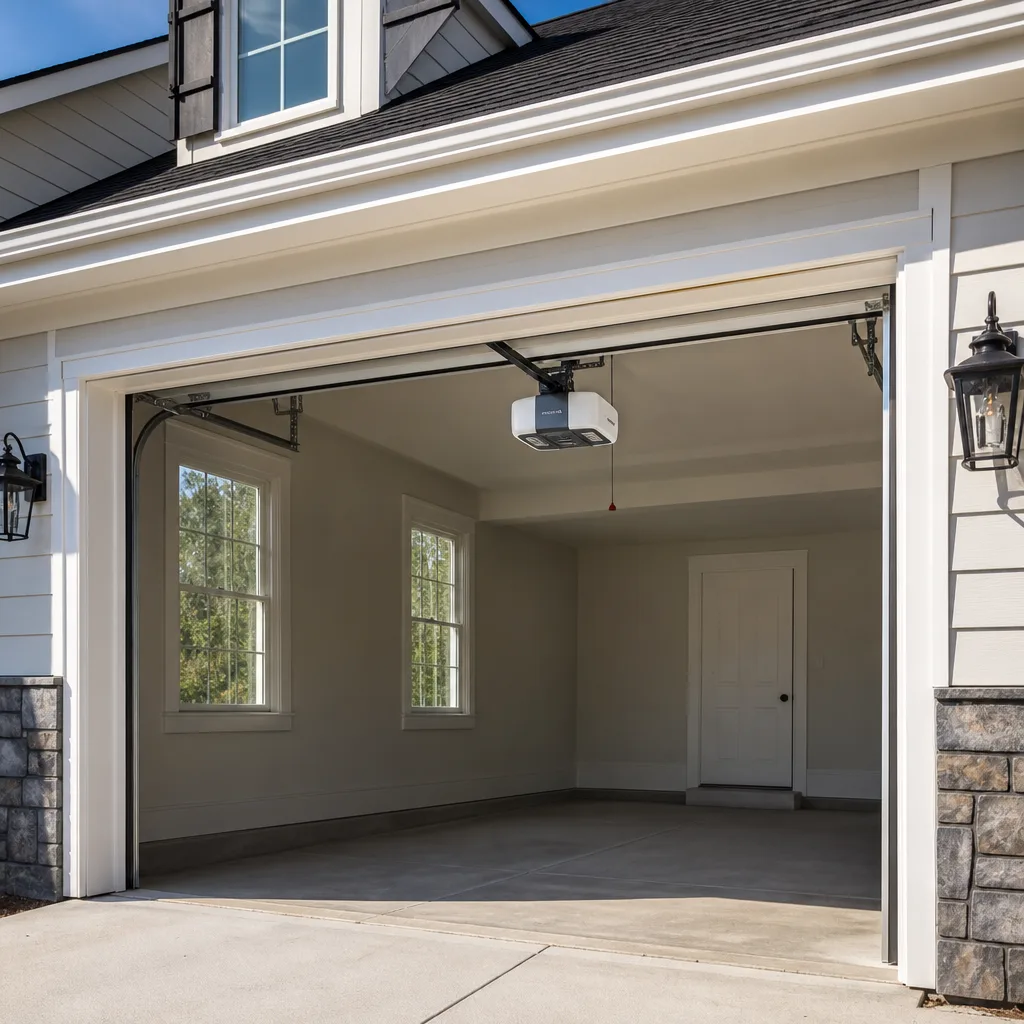
 Before
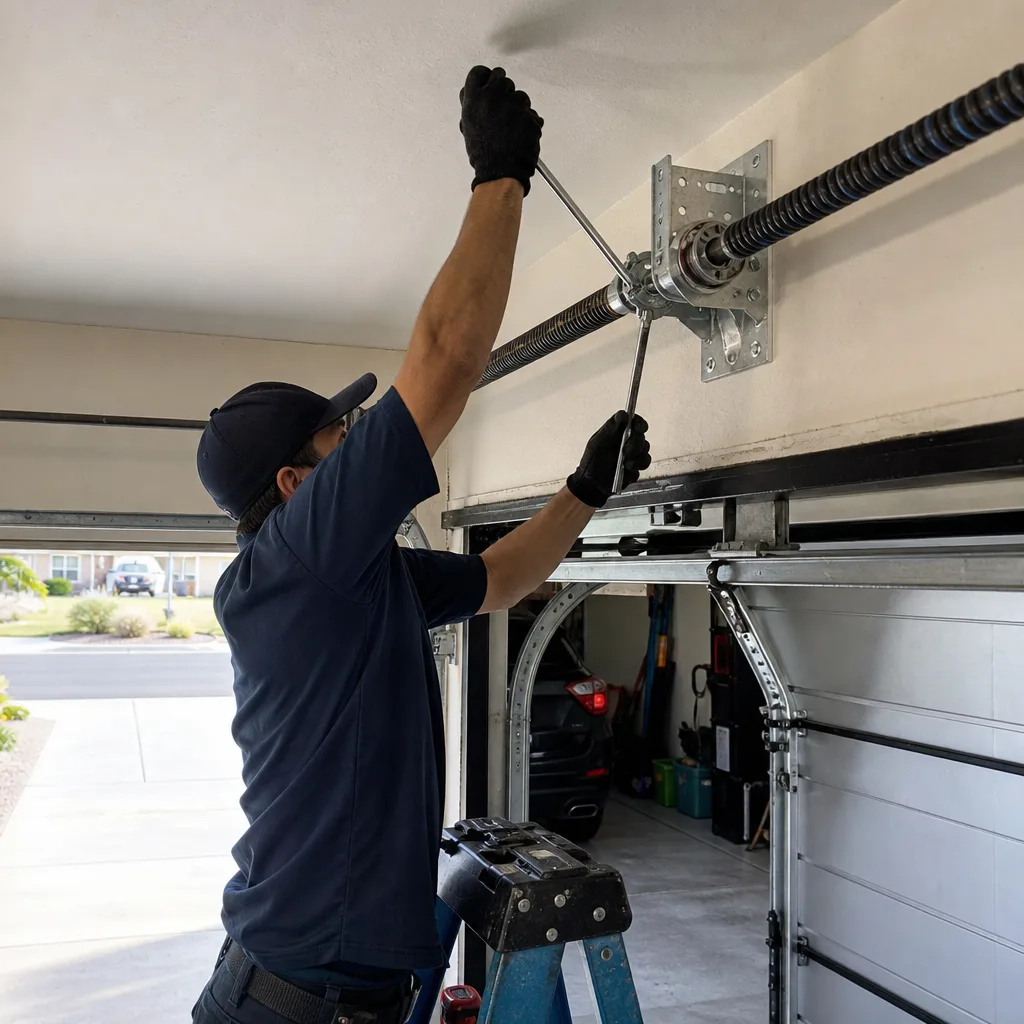 After
After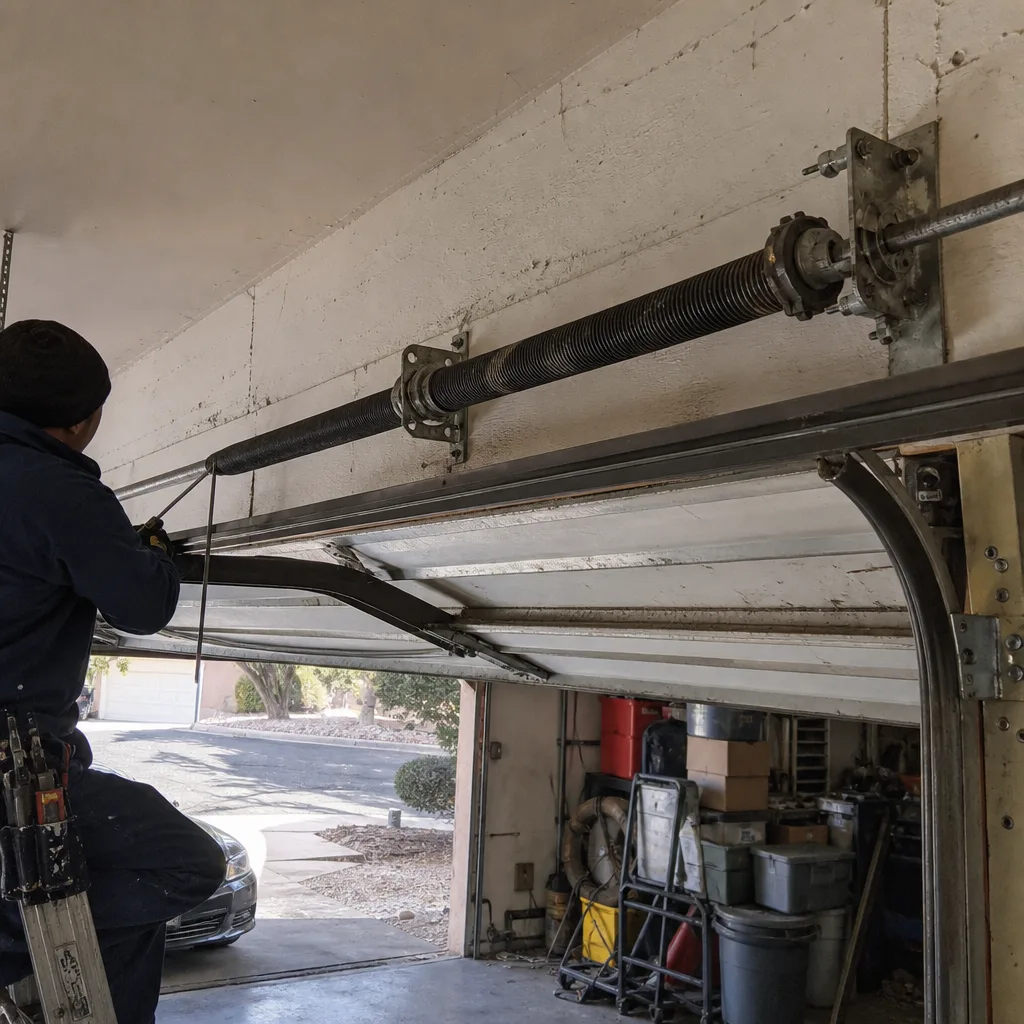 Before
 After
After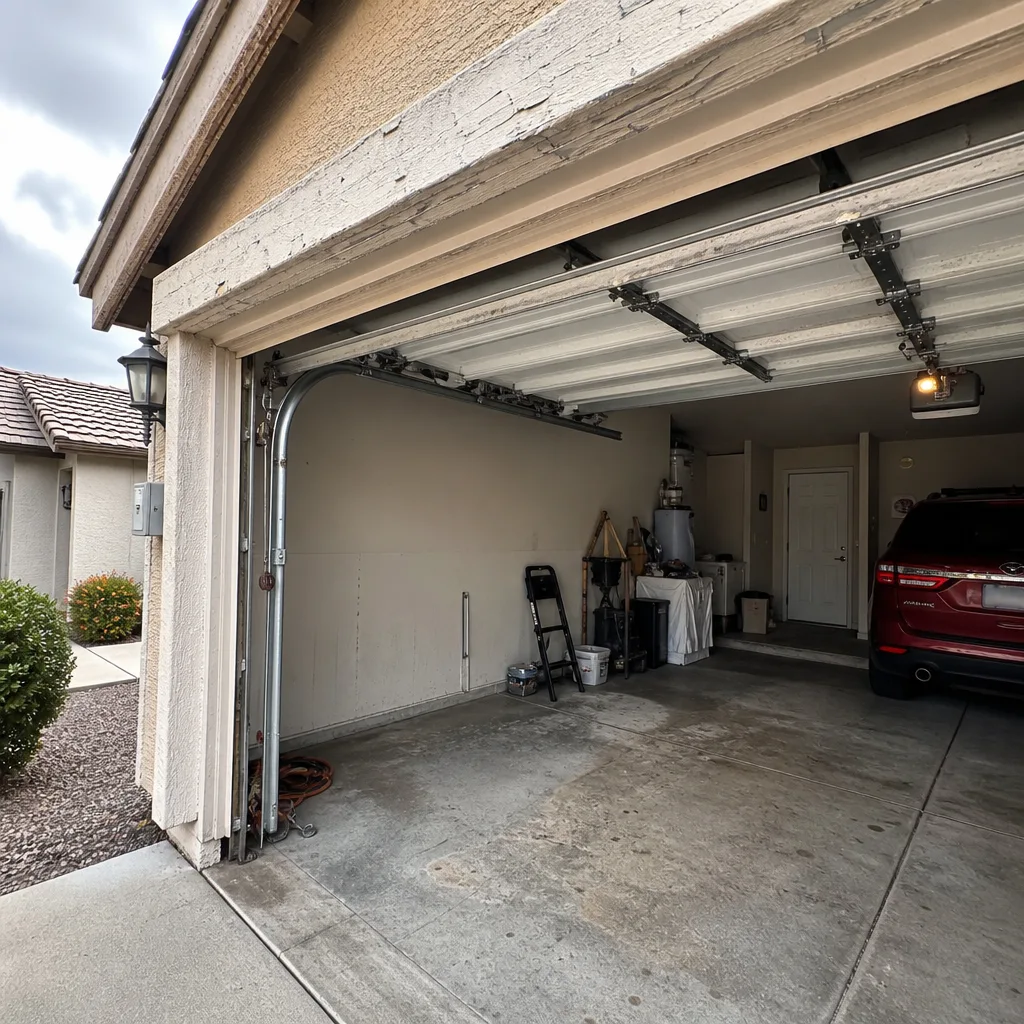 Before
 After
AfterThe Complete Guide to Garage Door in Surprise
A west-facing garage door in Surprise doesn’t just get hot. It gets expansion-stressed. Surface temperatures on a steel door can pass 160°F on a July afternoon while the inside face sits at 75°F. That’s an 85-degree differential across a single panel, and it changes everything about which springs last, which weatherseals hold, and which doors survive past their fifth summer. Most garage door advice written for Phoenix applies here imperfectly, because Surprise adds two variables Phoenix doesn’t have in the same concentration: caliche-heavy soil that shifts slabs by fractions of an inch per year, and one of the densest HOA overlays in Maricopa County. For more guides & resources specific to Arizona conditions, see our full blog. This guide builds the decision framework from those local variables up, not from manufacturer brochures down.
Quick Answer
A garage door in Surprise needs three things to last: a torsion spring rated for heat-cycling fatigue (not a generic 10,000-cycle spring), a bottom seal material that tolerates 160°F slab contact without adhesive failure, and an installation that accounts for the small slab movements common on caliche soil. Most doors fail early here because one of those three was treated as an afterthought.
Table of Contents
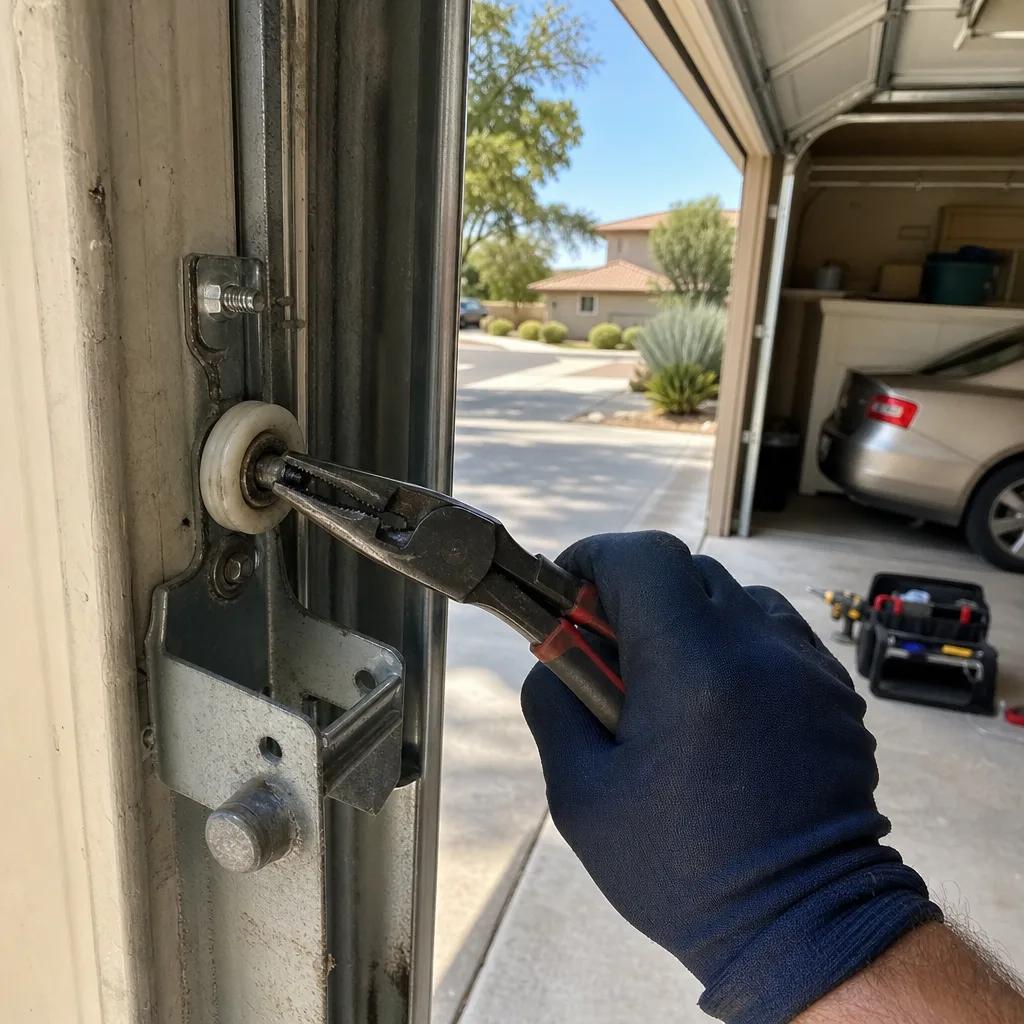
- How Surprise’s Climate Changes Garage Door Specs
- HOA Overlay Rules and Maricopa County Code
- Buying the Right Garage Door Material for Surprise
- The Three Local Failure Patterns Servo Photographs Most
- How to Read a Surprise Garage Door Installation Quote
- Garage Door Opener Considerations for Surprise Homes
- Seasonal Maintenance That Actually Matters in Surprise
- Common Mistakes to Avoid
- When to Call a Professional
- Frequently Asked Questions
- The Bottom Line
BeforeAfterHow Surprise’s Climate Changes Garage Door Specs
Surprise sits at roughly 1,175 feet of elevation in the West Valley, which sounds like a technicality until you start measuring surface temperatures. A west-facing door in Marley Park or Sun City Grand absorbs direct afternoon radiation for four or five hours a day from May through September. The steel skin expands. The polyurethane or polystyrene core doesn’t expand at the same rate. That differential stress is why certain doors develop visible panel warping by their third summer, and why the bottom seal degrades unevenly across the door’s width.
Here’s the practical math. A 16-foot steel door with a 0.0000065 coefficient of thermal expansion per inch per degree Fahrenheit will grow just under an eighth of an inch across its full width when the surface goes from 75°F to 160°F. That sounds trivial, but it’s enough to change how the panel sits in the vertical track. A track installed with Phoenix-generic tolerances doesn’t account for that movement, so the door starts binding at the top corners during the hottest part of the day. That binding is why some Surprise homeowners report their door operates smoothly at 7 a.m. and drags at 4 p.m.
This is the context that should drive every product decision:
- Torsion spring wire diameter matters more here than in most markets. A 0.225-inch wire spring on a standard 16×7 door will fatigue from heat cycling faster than the 0.250-inch wire spring the same door would get in a cooler climate. The heat doesn’t break springs directly. It lowers the metal’s fatigue threshold over thousands of cycles, so a spring rated for 10,000 cycles performs closer to 7,000 in Surprise conditions.
- Weatherseal compound is not interchangeable. EPDM rubber seals handle 160°F slab contact better than vinyl, which softens and deforms. We specify EPDM for most Surprise installs and repair work because vinyl bottom seals are a known September failure point.
- Lubricant choice is a longevity decision, not a preference. Light petroleum sprays burn off in a single summer here. A lithium-based or white lithium grease on the torsion spring and rollers lasts longer between applications and reduces wear noise.
- Insulated doors do double duty in Surprise. The R-value conversation is usually about comfort, but in West Valley conditions the bigger benefit is structural. An insulated steel door with a polyurethane core distributes the thermal differential more evenly across the panel, which reduces warping stress. That’s a durability argument, not an energy bill argument.
When we photograph doors that have survived ten or more Surprise summers without a panel replacement, they almost always share two traits: an insulated steel construction and springs that were spec’d one wire size up from the manufacturer minimum. Those aren’t coincidences.
HOA Overlay Rules and Maricopa County Code
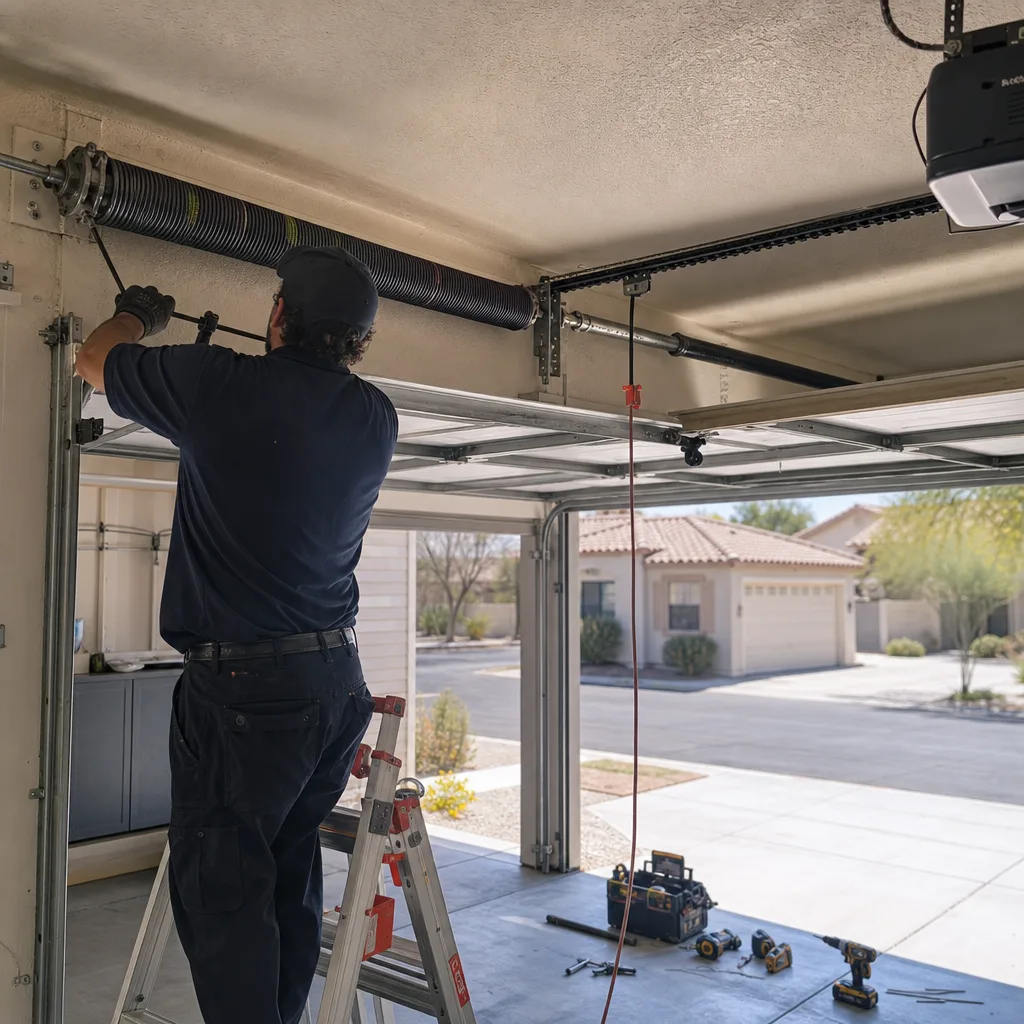
Surprise has the highest concentration of deed-restricted communities in the West Valley. Sun City Grand, Marley Park, Greer Ranch, Sierra Verde, and Bell West Ranch all have architectural review committees with published garage door requirements, and those requirements sit on top of Maricopa County building code rather than replacing it. A homeowner who satisfies one and ignores the other is buying a problem that surfaces at resale or at the next inspection. See Garage Door Permits, Codes & Inspections in AZ: What You Need to Know for the full compliance picture.
Maricopa County code governs the structural and safety side: wind load ratings for the door, proper spring containment with safety cables, photoelectric sensor placement, and ventilation requirements if there’s a gas appliance in the garage. The HOA governs the visible side: panel style, approved color palettes, finish sheen, and sometimes the manufacturer or model tier.
The sequence matters and it’s not complicated:
- Check the HOA architectural guidelines first. Most Surprise HOAs maintain a documented list of pre-approved door styles. Marley Park, for example, restricts door colors to a specific palette that aligns with the community’s architectural theme. Sun City Grand has different requirements than Greer Ranch, so don’t assume one community’s rules apply to another.
- Submit the full specification, not just a color swatch. The HOA wants the door manufacturer, model, panel profile, insulation type, and finish. A vaguer submission just adds a review cycle.
- Pull the Maricopa County permit after HOA approval. The county cares about wind load and safety compliance; the HOA cares about aesthetics. The order is HOA first, then county, because a county-approved door that violates HOA rules still triggers a violation letter.
- Keep both approvals with the closing documents. When you sell, the buyer’s agent will ask for proof that the door was compliantly installed. Surprise resale transactions have fallen apart over unpermitted door replacements more often than most homeowners realize.
We’ve pulled more doors in Surprise communities where the previous installation was done Phoenix-style, meaning the installer treated the HOA as a formality and discovered it wasn’t. Clause 1 of The Haven Standard requires a written scope before any work starts, and in Surprise that scope includes the HOA compliance step explicitly. It’s not an add-on. It’s part of the job.
Buying the Right Garage Door Material for Surprise
The material decision for a Surprise garage door should be made in this order: steel first, then aluminum with caveats, then wood only if you understand what you’re signing up for. This ranking is specific to West Valley conditions. A wood door in Flagstaff is a reasonable choice. A wood door facing west in Surprise is a maintenance contract disguised as a design statement.
Insulated Steel: The Default Answer
A 24-gauge or 25-gauge steel skin over a polyurethane core is the most durable configuration for Surprise’s thermal cycling. Polyurethane bonds to the steel skin more aggressively than polystyrene, which reduces delamination risk when the skin is expanding and contracting daily. Multilayer construction (steel, insulation, steel back) adds rigidity that single-skin doors don’t have. Clopay and Amarr both make polyurethane-core models that have performed well across thousands of Surprise installations, and Chamberlain and LiftMaster openers pair cleanly with their weight profiles. The upfront cost is higher, and the longevity differential in Surprise conditions justifies it.
Aluminum: Fine With the Right Skin
Aluminum doors are lighter and cheaper, but they fail here in a specific way: the finish. Powder-coated aluminum holds up acceptably, but anodized finishes on darker colors absorb more heat and can develop visible oxidation within three to five years. The other issue is that aluminum transmits heat faster than steel, so the temperature differential between the outside skin and the interior face is more pronounced, which accelerates thermal warping at the panel joints. If you’re choosing aluminum, choose a light color, a powder-coated finish, and an insulated core.
Wood: Understand the Maintenance Math
A wood door in Surprise, particularly on a west or south exposure, will require refinishing every one to two years. The dry heat draws moisture out of the wood, the grain opens, and the finish breaks down. Add monsoon humidity swings and you get warping. If you have a wood door that’s original to a home built in the early 2000s in a community like Sun City Grand, it’s likely already showing fatigue. The replacement conversation is usually steel for a reason.
Vinyl: A Niche Choice
Vinyl doors resist corrosion, which makes them attractive for homes near irrigation or pool equipment. But they don’t insulate well and they’re available in fewer styles, which limits HOA compliance in the more architecturally prescriptive Surprise communities. We rarely spec them.
The Three Local Failure Patterns Servo Photographs Most
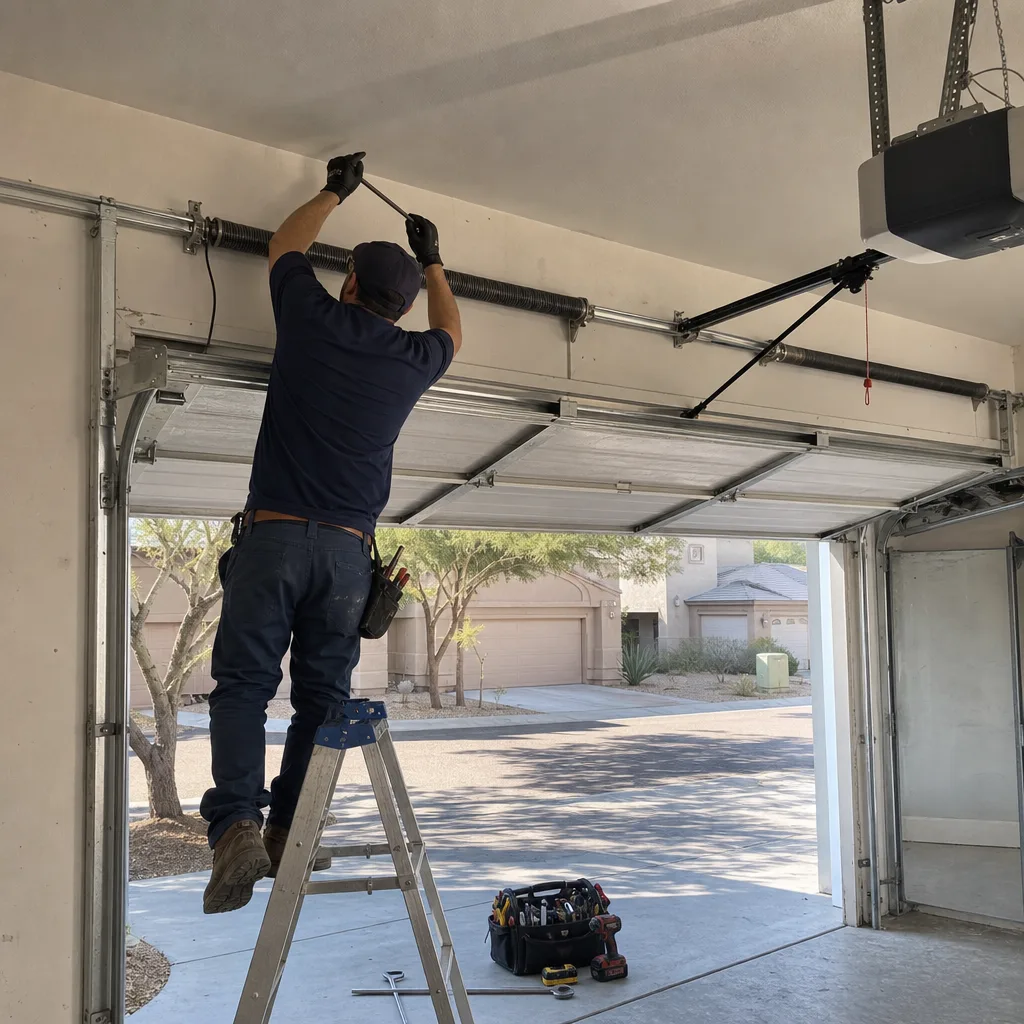
Clause 4 of The Haven Standard requires our technicians to photograph the failed component before quoting a replacement. Over the years, that photo record reveals patterns. In Surprise, three failure types show up more than any others, and all three are traceable to local conditions rather than manufacturing defects.
1. Spring Fatigue From Heat Cycling
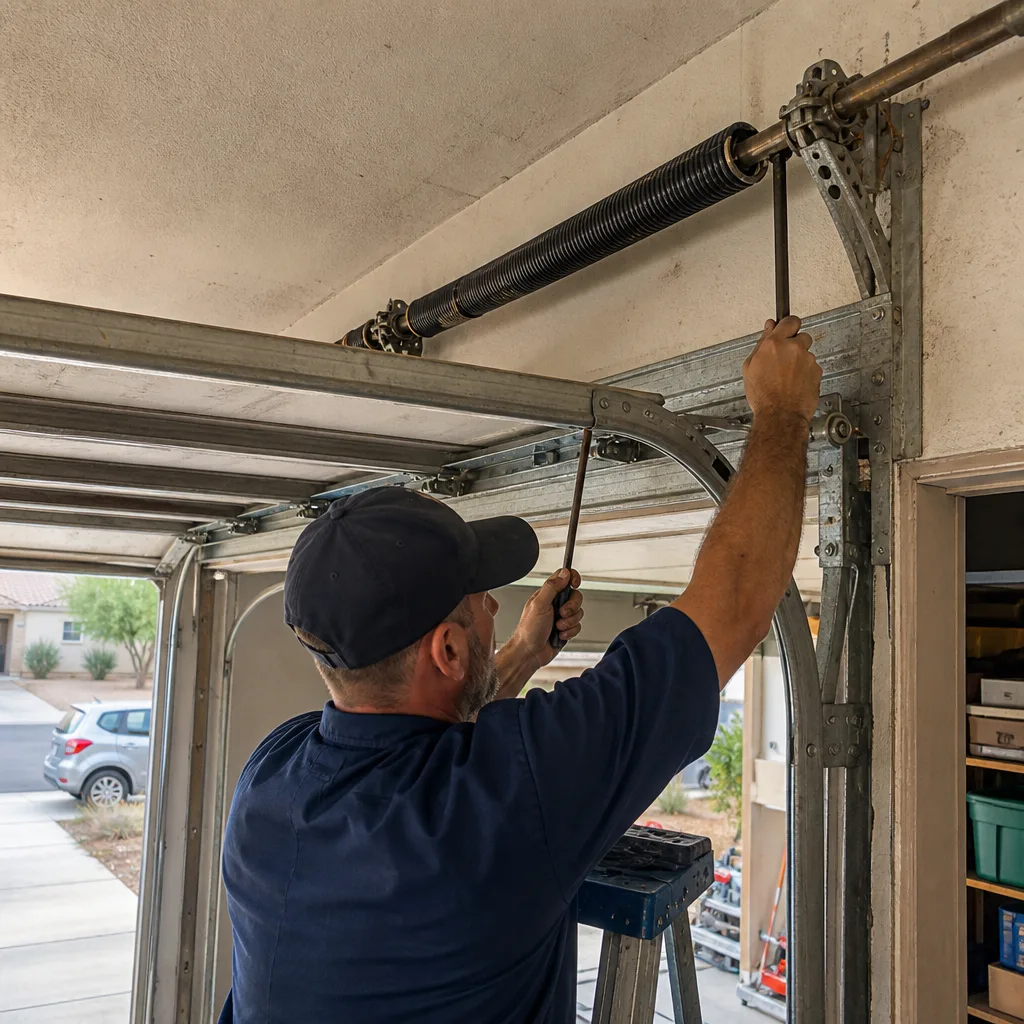
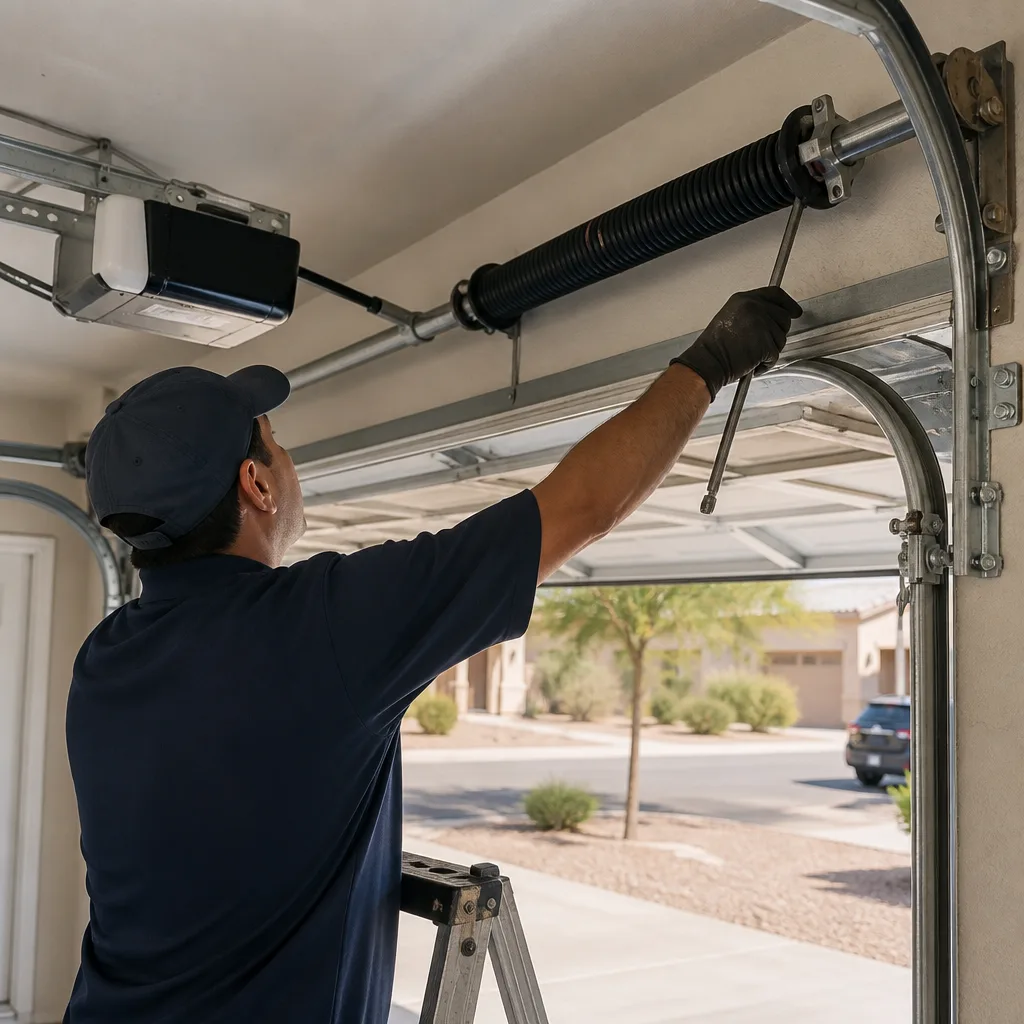
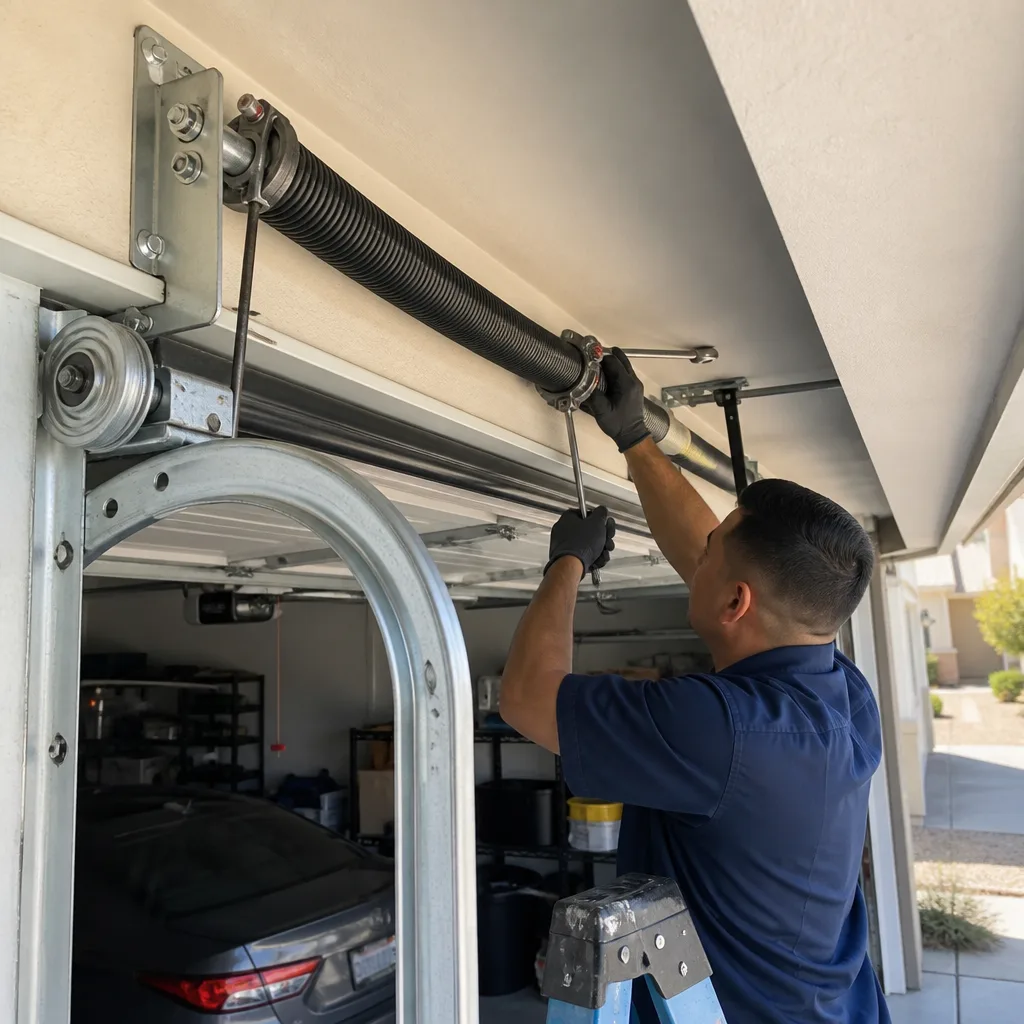
What we see: a torsion spring with a clean, single-fracture break at a coil, usually off-center. The wire diameter measures at or below the manufacturer minimum for the door weight. The spring has gone through several thousand cycles (a cycle is one full open and close), and each hot afternoon added stress to the coil structure. The break isn’t dramatic. It’s quiet, often overnight.
What it means: The spring was technically specified correctly for the door, but not for the door’s operating environment. A spring rated for 10,000 cycles in a moderate climate showed metal fatigue at roughly 7,000 cycles because heat exposure lowered the fatigue threshold. We photograph the break location and the wire diameter, then spec the replacement one wire size up where the door weight permits.
2. Bottom Seal Adhesive Failure on Concrete
What we see: a bottom seal that has separated from the door’s bottom retainer, with the adhesive residue hardened and cracked. The seal itself often looks fine otherwise, which is why homeowners don’t notice it until monsoon season brings dust and rain under the door.
What it means: The gap between the door bottom and the slab changes throughout the day as the concrete expands and contracts. That movement stresses the adhesive bond. Add 160°F slab contact and the adhesive degrades from heat before it degrades from age. The fix is an EPDM seal, which tolerates the heat better, plus a mechanical fastening method rather than adhesive alone. We photograph the failed bond before quoting the replacement because the difference between a $12 seal and a $180 seal-and-retainer replacement matters, and the customer should see which one they’re paying for.
3. Cable Drum Wear From Sandy Air
What we see: the lift cables are unevenly wound on the cable drums, with visible scoring on the drum surface and fine dust packed into the cable grooves. The cables themselves show fraying at the points where they wrap over the drum.
What it means: Surprise’s air carries fine particulate from the surrounding desert, and that dust works its way into the drum grooves. Under tension, the dust acts as an abrasive. Over hundreds of cycles, it wears the drum surface and the cable together. When the cable frays and snaps, the door drops unevenly, which is the most dangerous garage door failure mode there is. If you hear a grinding, abrasive noise when the door moves, this is often the cause.
We include the photo record with every Surprise service call because the customer should see the failed component, understand why it failed, and know what the replacement entails before they approve anything.
How to Read a Surprise Garage Door Installation Quote
A garage door installation quote in Surprise should be itemized enough that you can see the door, the labor, the hardware, and the compliance steps separately. Our Garage Door Cost Breakdown: The Surprise Homeowner’s Reference for 2026 explains what each line item should include. If “labor” is a single line item without explanation, you’re likely looking at a quote that will generate a callback charge later.
Here’s how to read one line by line:
- The door itself. The quote should name the manufacturer, model, size, panel configuration, insulation type, and color. “16×7 white steel door” is too vague. “Clopay Gallery 16×7, 24-gauge steel, polyurethane core, white, short panel” is a spec you can compare across quotes.
- Hardware and components. Torsion springs, cable drums, cables, hinges, rollers, and track should be listed with their specifications. Springs should include wire diameter and expected cycle rating. If this line is missing, the installer is quoting a door without telling you how it will be counterbalanced.
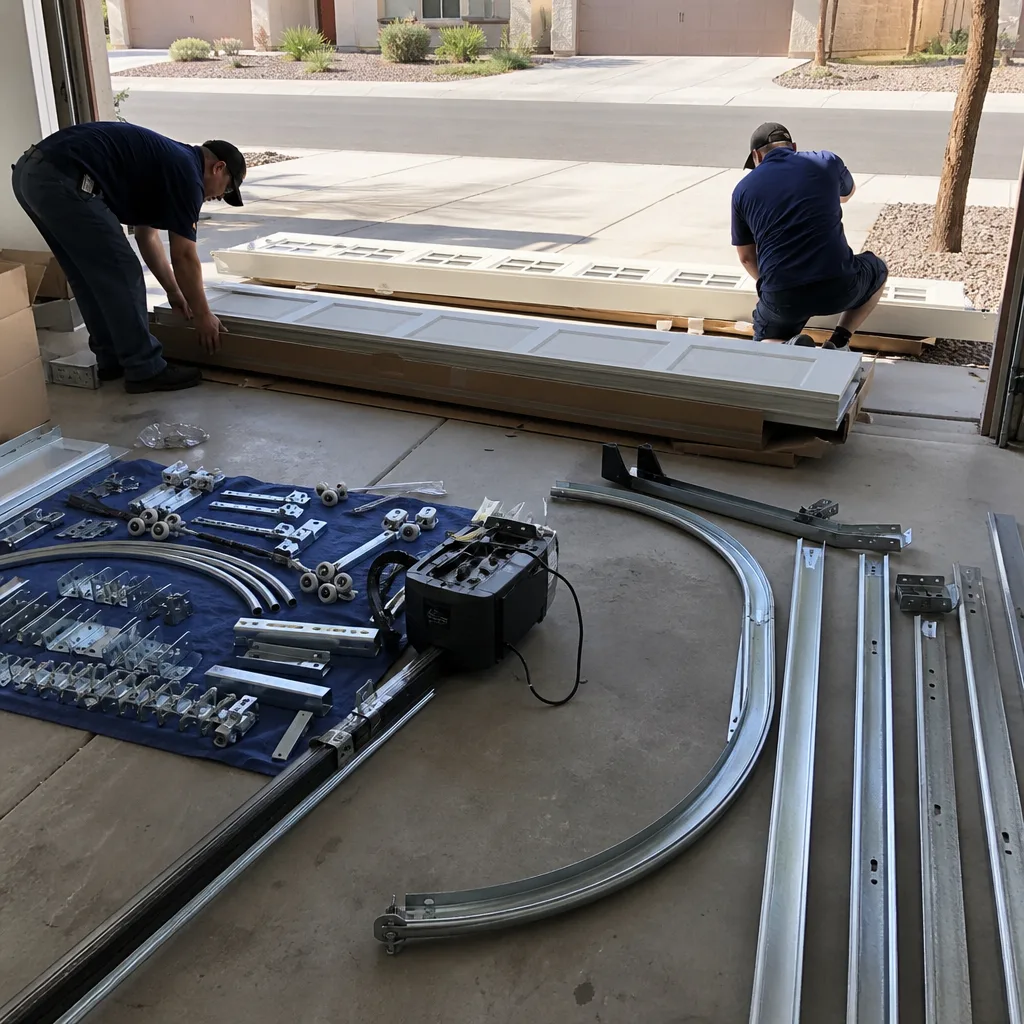
- Labor and scope. The labor line should itemize what the installation includes: removal and disposal of the existing door, new track installation, spring winding and tensioning, opener compatibility check, and debris cleanup. A quote that doesn’t mention disposal is a quote that leaves a pile of old door in your driveway.
- HOA and permit compliance. In Surprise, this should be a named line item or a stated inclusion. If the quote says “permits are the homeowner’s responsibility” and nothing else, the installer is outsourcing the hardest part of the process to you.
- Warranty terms. Manufacturer warranty on the door, and the installer’s own workmanship warranty. The workmanship warranty should be in writing. Our 365-Day Done Right Promise is documented in the written scope, not verbal.
Omissions matter more than inclusions. A Surprise quote that’s missing the hardware line is a low-ball that will generate a callback charge when the installer rediscovers that torsion springs cost money. A quote that doesn’t mention HOA compliance hasn’t been written for this market. A quote that says “labor” and nothing else reserves the right to define labor however the installer wants later. Clause 1 of The Haven Standard exists because of exactly those quotes.
Garage Door Opener Considerations for Surprise Homes
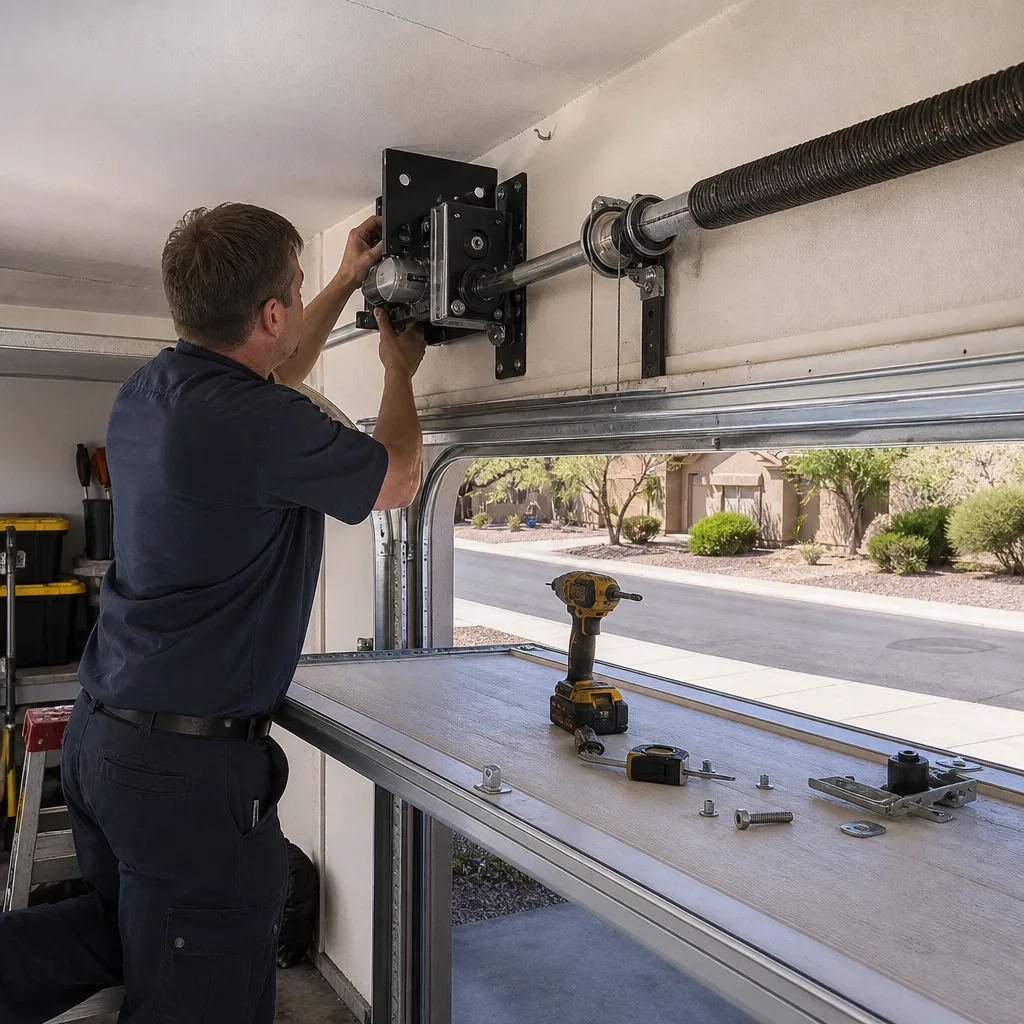
The garage door opener conversation in Surprise is different from the door conversation and it matters more than most people think. The right opener, installed correctly, protects the door from damage. The wrong one yanks unevenly and shortens door life.
What Surprise Homes Need
Most Surprise homes have either a 7-foot or 8-foot door and a single-car or two-car garage. The opener decision should be based on door weight, usage frequency, and noise tolerance. Belt-drive openers from LiftMaster and Genie are the most popular in Marley Park, Greer Ranch, and Sun City Grand because they’re quiet enough for garages that share a wall with a bedroom. Chain-drive openers are cheaper and louder; they’re fine for detached garages and homes where noise isn’t a factor. Chamberlain’s belt-drive models sit in the middle on price and are widely compatible with the steel-door weight profiles common in Surprise.
The Heat Factor for Openers
Garage interiors in Surprise regularly exceed 105°F in summer, and the opener’s logic board (the circuit board that controls open, close, and safety sensor logic) is the component most sensitive to heat. Openers mounted in unconditioned garages run their entire service life at higher ambient temperatures than manufacturer test conditions assume. We see logic board failures at a higher rate on openers installed against west-facing garage ceilings, where the afternoon heat concentrates. If your garage has a west-facing ceiling wall, specify an opener with a metal gear housing and keep the motor ventilation clear of insulation and boxes.
Safety Reversal Sensors
Every opener in Surprise must have photoelectric sensors mounted 6 inches or less from the garage floor, per Maricopa County code and federal safety standards. These sensors live at the exact height where dust, tools, and lawn equipment accumulate. If your door stops reversing or won’t close at all, the sensor lenses are the first thing to check. Clean them. Check alignment. If the issue persists, the sensor wiring or the logic board is the next suspect.
For a deeper dive on garage door opener repair and installation in Surprise, we’ve written a separate guide that covers the full spec range and the common failure modes.
Seasonal Maintenance That Actually Matters in Surprise
Most garage door maintenance checklists are written for four-season climates and include steps that don’t apply here. Surprise maintenance is simpler and more specific: prepare for the heat season (April), respond to monsoon dust (July), and check everything again before the mild season (October).
April: Pre-Heat Check
- Lubricate the torsion spring and rollers. Use a lithium-based grease. Apply sparingly. The goal is a thin coating, not a dripping mess.
- Inspect the bottom seal for adhesive failure. Run your hand along the seal where it meets the door. If it lifts or feels brittle, replace it before the heat finishes the job.
- Test the safety reversal system. Close the door on a roll of paper towels. The door should reverse within two seconds of contact. If it doesn’t, the force setting or the sensors need attention.
July: Monsoon Dust Response
- Clean the track and rollers. Fine dust accumulates fast during the haboob season. Wipe the track with a dry cloth and remove any packed dust from the roller brackets.
- Check the cable drums for scoring. Look for visible wear marks on the drum surface. If you see grooves forming, that’s the sandy-air abrasion pattern we described earlier.
- Verify the door balance. Disconnect the opener (pull the red release cord) and manually lift the door to waist height. It should stay put. If it drops, the springs are losing tension and need professional attention.
October: Pre-Winter Calibration
- Tighten all track bolts and hinge screws. A summer of expansion and contraction loosens hardware.
- Check the weatherstrip on the sides and top. The mild season is when small gaps become draft points. Replace worn strips before the heating season.
- Take photos. Document the condition of your springs, cables, drums, and seal. A photo record from October is the baseline for next April’s comparison.
If you want the full installation picture before you maintain what’s already there, our garage door installation guide for Surprise walks through the entire process from product selection to final inspection.
Common Mistakes to Avoid
- Specifying a garage door for Phoenix conditions. Surprise’s combination of higher elevation, extreme west-facing afternoon heat, and caliche soil movement means Phoenix-generic door specs will underperform here. The spring size, seal compound, and track tolerance all need Surprise-specific attention.
- Skipping the HOA review because the county permit covers it. The county doesn’t care what color your door is. The HOA does. Skipping the HOA step means a violation letter and a rework order, not a waiver.
- Choosing a wood door for a west-facing exposure. Wood doors in Surprise require refinishing every one to two years on west-facing exposures, and most homeowners don’t maintain that cadence. The door warps, the finish fails, and the replacement conversation becomes more expensive than the original insulation would have been.
- Using a vinyl bottom seal instead of EPDM. Vinyl softens and deforms at the temperatures Surprise slabs reach in July and August. The seal fails before its expected service life is half over.
- Accepting a quote without a hardware line. A quote that doesn’t itemize springs, cables, drums, and rollers is a quote that will have a surprise addition later. If the hardware line isn’t there, ask for it in writing.
- Ignoring cable drum noise. That grinding sound during operation is sandy air wearing the drum surface. Ignored long enough, it becomes a snapped cable and an emergency-level repair.
- Putting off a torsion spring replacement because the door still opens. Torsion springs fail catastrophically, not gradually. When the spring reaches its fatigue threshold, it snaps. The door may still operate manually, but the next motorized cycle can be the one that causes a serious injury or door damage.
When to Call a Professional
Torsion springs are under tension at all times, even when the door is closed. A snapped or worn torsion spring should never be handled by a homeowner. The same applies to cable drums and lift cables: when a cable snaps, the door becomes unbalanced, and the residual spring tension can cause the door to drop without warning. If your door is binding at the top corners during the hottest part of the day, if the bottom seal has separated from the retainer across more than a few inches, or if you hear grinding from the cable drums, that’s a professional call. If you’re replacing an entire door in an HOA community, the compliance sequence alone justifies a licensed installer who does it weekly. Read our DIY vs Professional Garage Door: The Surprise Homeowner’s Decision Guide before deciding how to proceed. Servo Garage Doors Surprise offers free estimates in Surprise. Call (928) 588-1812 and we’ll quote the work in writing before we touch anything.
Frequently Asked Questions
A new insulated steel garage door in Surprise typically costs between $1,400 and $3,200 installed, depending on size, insulation type, and HOA compliance requirements. Upgrade to a polyurethane-core door with a higher R-value and the price moves toward the upper end. The written quote you receive should itemize the door, hardware, labor, HOA compliance, and permit handling separately. Call (928) 588-1812 for an exact quote; estimates are free and always in writing.
In Surprise’s heat, a standard torsion spring rated for 10,000 cycles lasts closer to seven or eight years for an average household that opens the garage three to four times a day. Heat cycling lowers the metal’s fatigue threshold, which is why we spec springs one wire size up from the manufacturer minimum where the door weight permits. When the spring snaps, it’s not a gradual failure; it’s a clean break.
Yes, if you live in a deed-restricted community like Sun City Grand, Marley Park, Greer Ranch, or Bell West Ranch. The HOA review is separate from the Maricopa County permit, and both are required. The correct order is HOA approval first, then county permit. Installing a door without HOA approval creates a violation that will surface at resale.
No. Torsion springs are under several hundred pounds of tension even when the door is closed. A spring that snaps during handling can cause serious injury or death. Leave torsion spring replacement, cable replacement, and drum work to a trained professional with the right winding bars and safety procedures.
That’s thermal expansion at work. The door’s steel surface heats to over 160°F on west-facing exposures in Surprise, expanding the panels slightly while the track stays relatively stable. If the track was installed with tolerances that don’t account for that movement, the door binds at the top corners during the hottest part of the day. The fix is a track adjustment or subtle realignment, not a new door.
A belt-drive opener from LiftMaster, Genie, or Chamberlain is the most common choice in Surprise because it’s quiet and handles the weight of insulated steel doors well. The more important variable is heat: openers mounted near a west-facing ceiling run warmer, which shortens logic board life. Keep the motor area ventilated and choose an opener with a metal gear housing. For more detail, check our garage door opener repair and installation guide for Surprise.
Yes. Our Surprise trucks carry torsion springs in the wire diameters and lengths most common to West Valley doors, plus cables, drums, rollers, hinges, seals, and opener components. Most repair work is completed the same day. We photograph the failed part before quoting the replacement, then quote the work in writing per Clause 1 of The Haven Standard.
The Bottom Line
A garage door in Surprise is a local engineering problem, not a generic product category. The heat cycles the springs harder, the sandy air abrases the cable drums, the slab movement stresses the bottom seal, and the HOA overlay adds a compliance step that Phoenix installers don’t always account for. Buy an insulated steel door with polyurethane core, spec the springs one wire size up, use EPDM seals, and read every quote line by line. For a full breakdown of the repair side, visit our garage door repair guide for Surprise. If you’re ready to talk specifics, call (928) 588-1812 and ask for a written quote. That’s how we start every job, and it’s how you’ll know what leaving looks like before we arrive.
Written by Marcus Deller, Owner at Servo Garage Doors Surprise, serving Surprise since 2015.