
Last updated September 20, 2026
Full 25-point door and opener safety check with every visit - springs, cables, rollers, tracks, and your LiftMaster or Chamberlain opener included
You get a price before we start. It does not change when the truck arrives.
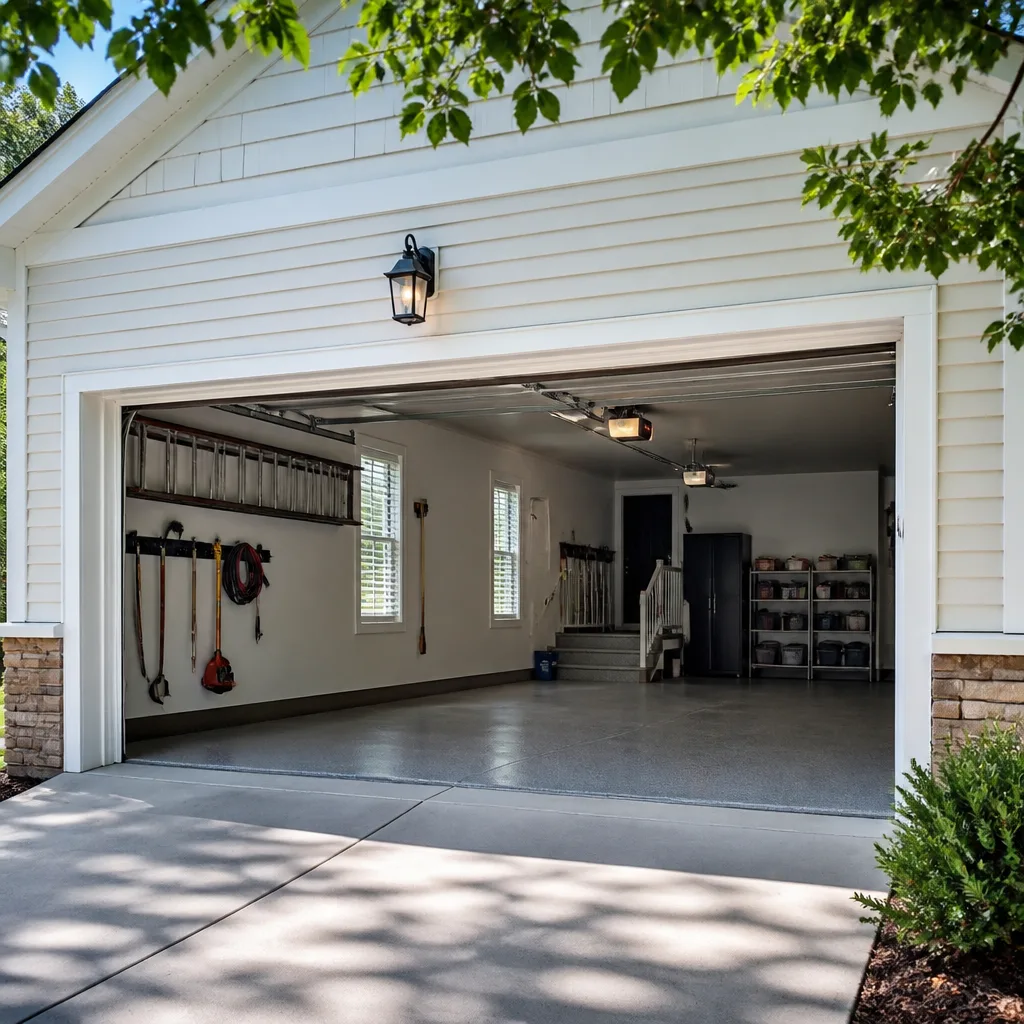
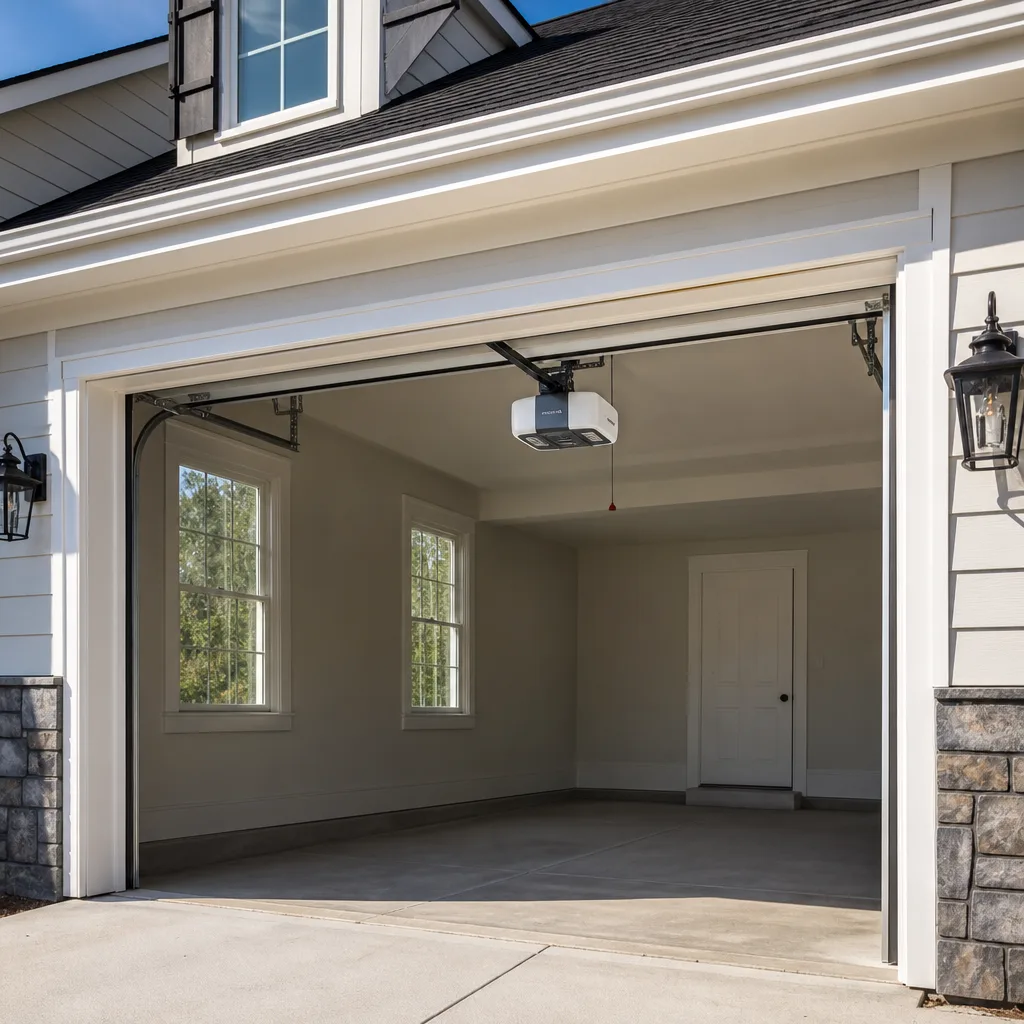
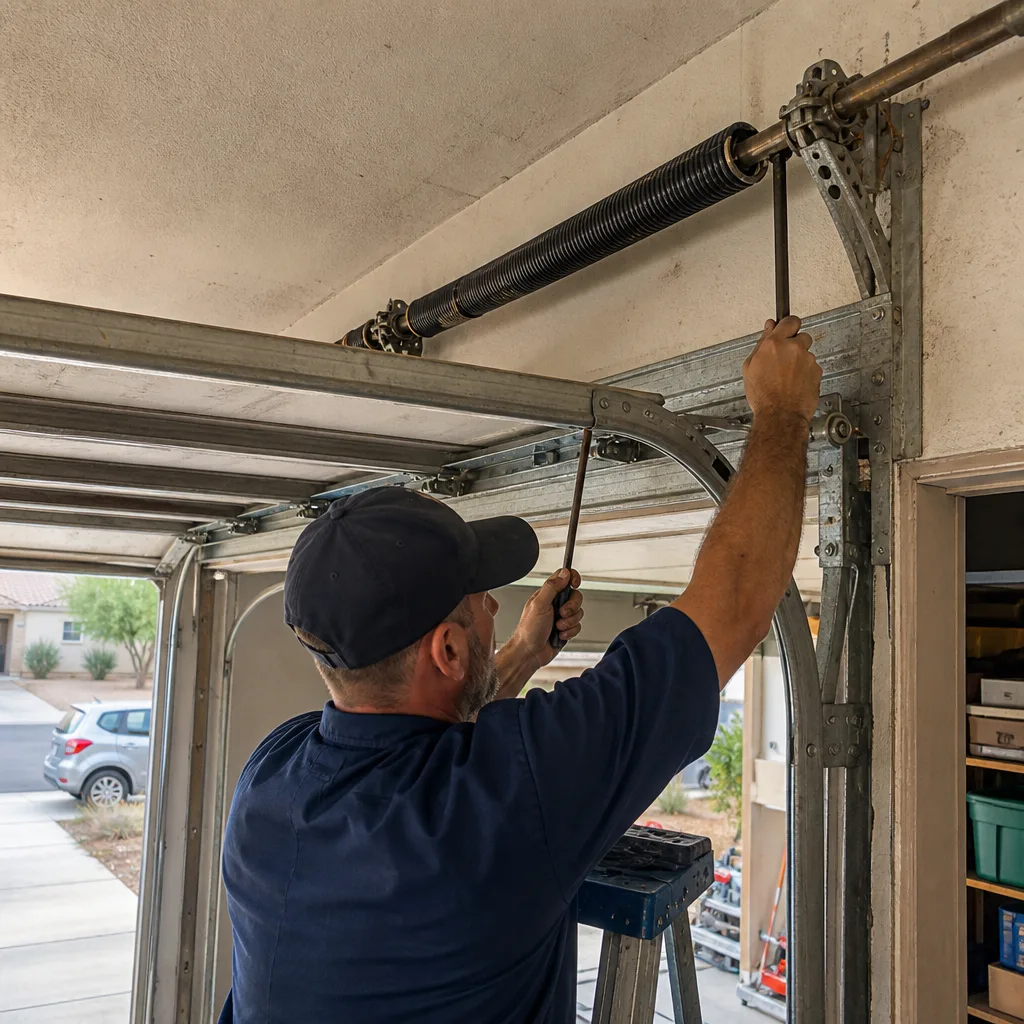 Before
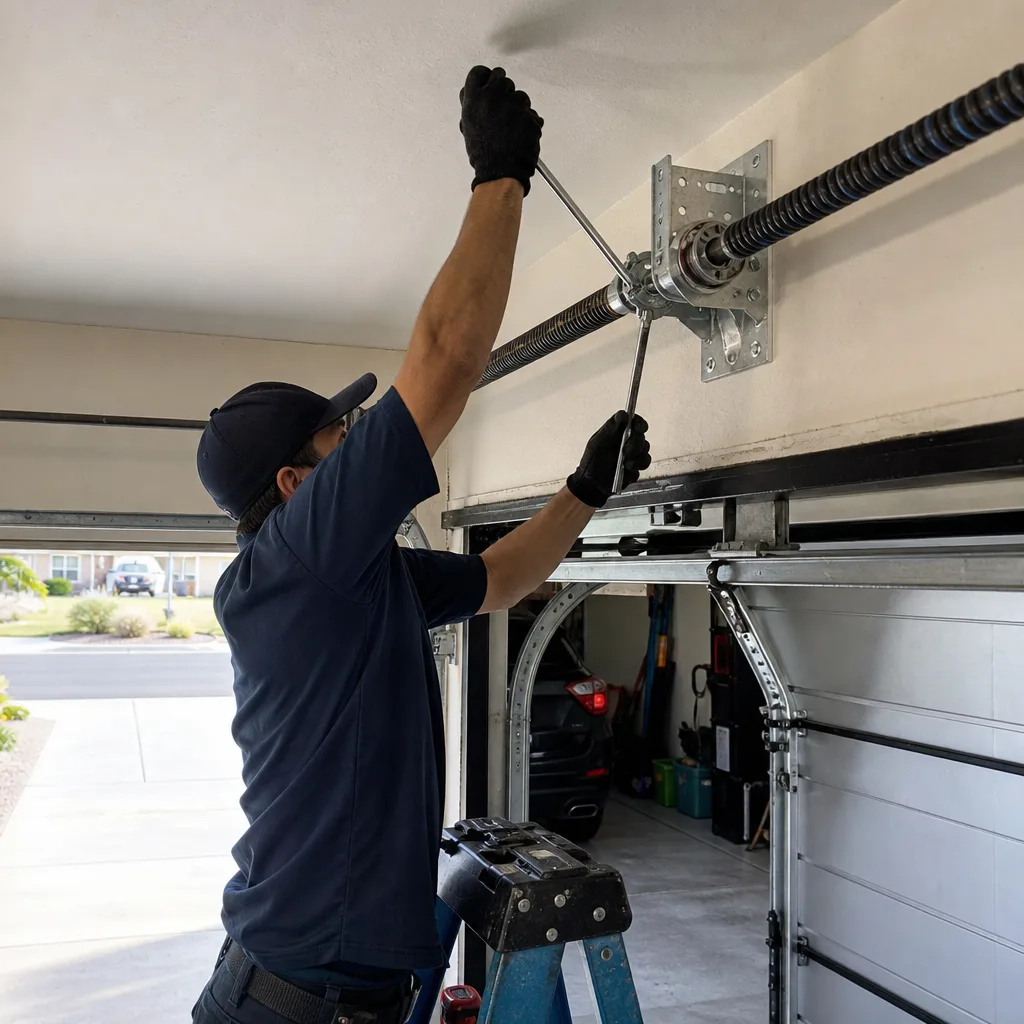 After
After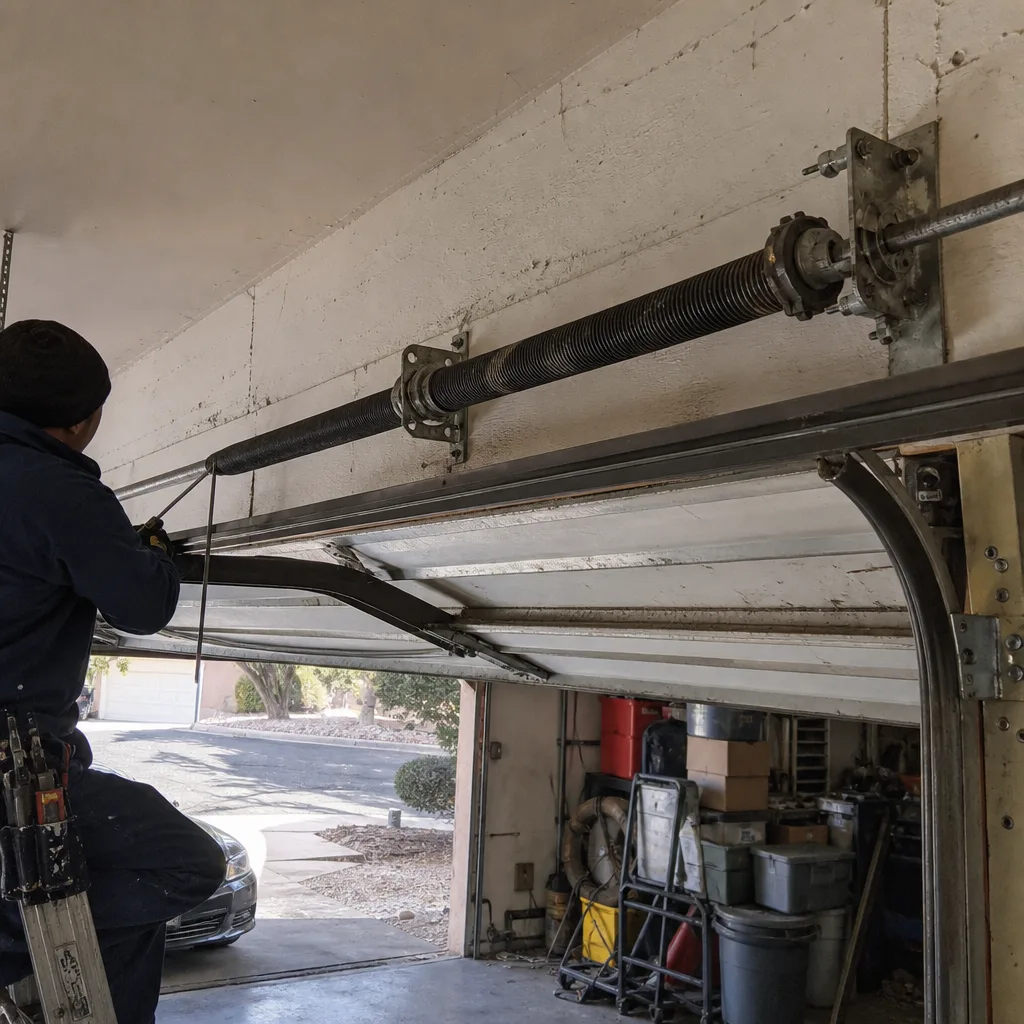 Before
 After
After Before
 After
AfterSeasonal Garage Door Care for Surprise: Year-Round Homeowner’s Guide
In Surprise, the worst month for garage door mechanical failure is July - not because of sudden storms, but because six weeks of pre-monsoon heat has already fatigued the spring set, dried out the roller bearings, and softened the bottom seal before the first dust storm arrives. The door was already compromised; the storm just revealed it. Most homeowners treat garage door maintenance as a single annual checklist item, but Surprise doesn’t have four seasons. It has three distinct stress periods - pre-monsoon heat buildup, monsoon particulate and moisture, and winter thermal contraction. Each one asks something different from your door, and each one has a specific maintenance window. This guide walks through all three, month by month, so you know what to check, when to check it, and what actually matters versus what you can skip. For more guides & resources on keeping your door running year-round, see our blog.
Quick Answer
Seasonal garage door care in Surprise means three targeted maintenance windows tied to the local climate: a pre-monsoon inspection and adjustment (May through June), post-haboob cleaning and seal assessment (July through September), and a winter balance re-check after overnight lows drop into the 40s (December through February). A homeowner who follows these three windows will catch most mechanical failures before they strand a car in the driveway or leave a door half-open at night. For a deeper look at each season’s demands, see The Complete Guide to Garage Door in Surprise.
Table of Contents
- The Pre-Monsoon Window (May-June): The Checks That Matter Before the Dust Arrives
- Monsoon Period (July-September): Particulate, Seal Integrity, and Bearing Wear
- Post-Monsoon Reset (October-November): Lubrication, Balance, and Frame Rack
- Winter Contraction (December-February): Why Your Door Feels Heavy in January
- The Year-Round Photo Log: Your Best Tool for Faster Quotes and Zero Disputes
- What You Can Safely Do Yourself (and What You Shouldn’t)
- Common Mistakes to Avoid
- When to Call a Professional
- Frequently Asked Questions
BeforeAfterThe Pre-Monsoon Window (May-June): The Checks That Matter Before the Dust Arrives
By late May, a garage door in Surprise has already been through two months of 90-plus degree afternoons with no rain. That heat does something specific to every metal component on the door: it expands the torsion spring coil gradually, it bakes the grease out of the roller bearings, and it softens the rubber bottom seal until it loses its rebound. Then the humidity arrives in early July, and the dust storms follow. If the spring tension wasn’t set correctly in May, the first haboob just finishes what the heat started.
Here’s what we check during the pre-monsoon window, and why each one matters before the particulate starts moving:
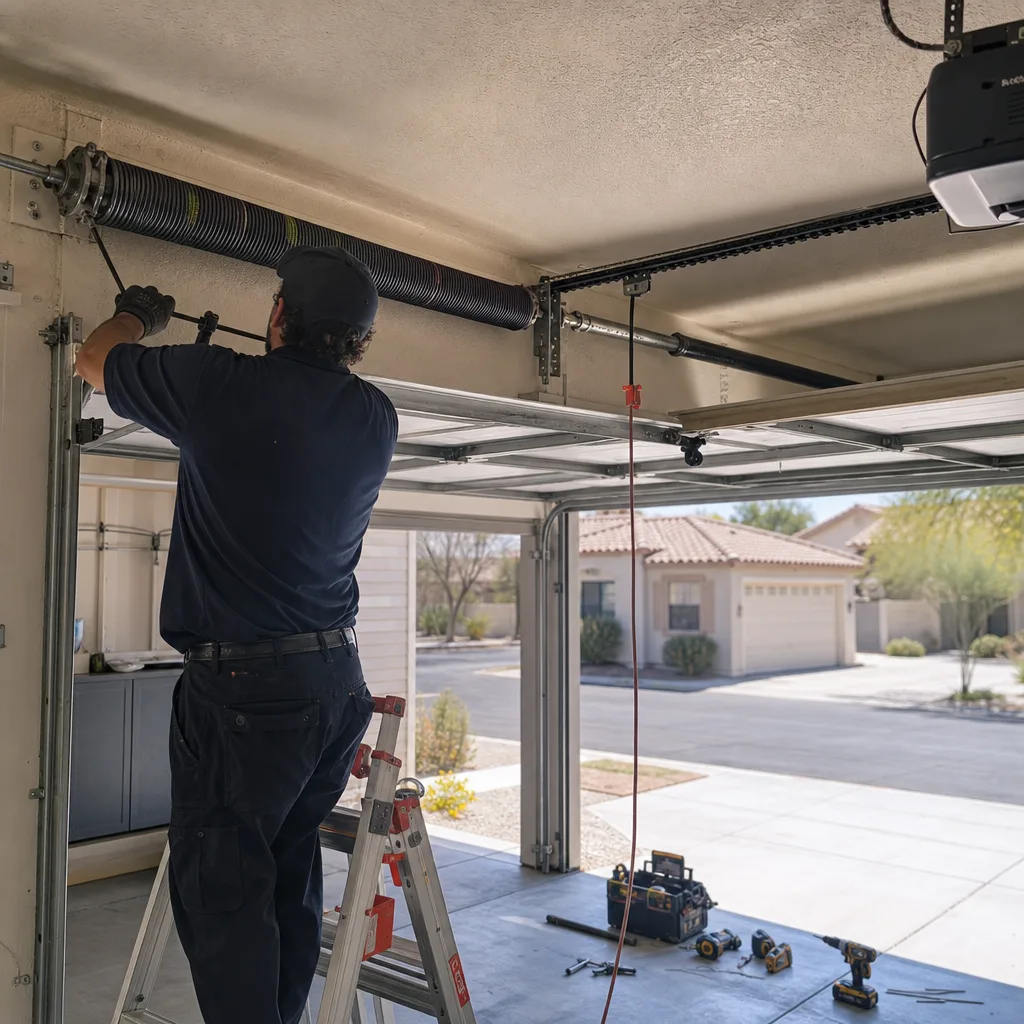
- Cable drum inspection. The cable drum sits at each end of the torsion tube and spools the lift cables. When heat cycles the metal over several weeks, the set screws that clamp the drum to the tube can back off a fraction of a turn. That’s enough to let the cable stack unevenly, and an uneven stack means the door starts lifting crooked. By the time it’s visibly crooked, the cable has already worn a groove into the drum surface. This is a two-minute visual check, and it’s the last safe moment to have it corrected before the heat cycling locks the setting.
- Bottom seal adhesion test. The rubber bottom seal, sometimes called the astragal, is what keeps dust, water, and scorpions out of the garage at grade level. In May and June, the adhesive holding the seal can soften from heat and start to peel at the ends. Run your finger along the underside of the door where the seal meets the door bottom. If the seal lifts away from the door with light finger pressure, it’s time to replace the seal and the adhesive channel. If you wait until a July monsoon soaks the floor, that loose seal won’t stop a half-inch of standing water from pooling in the garage.
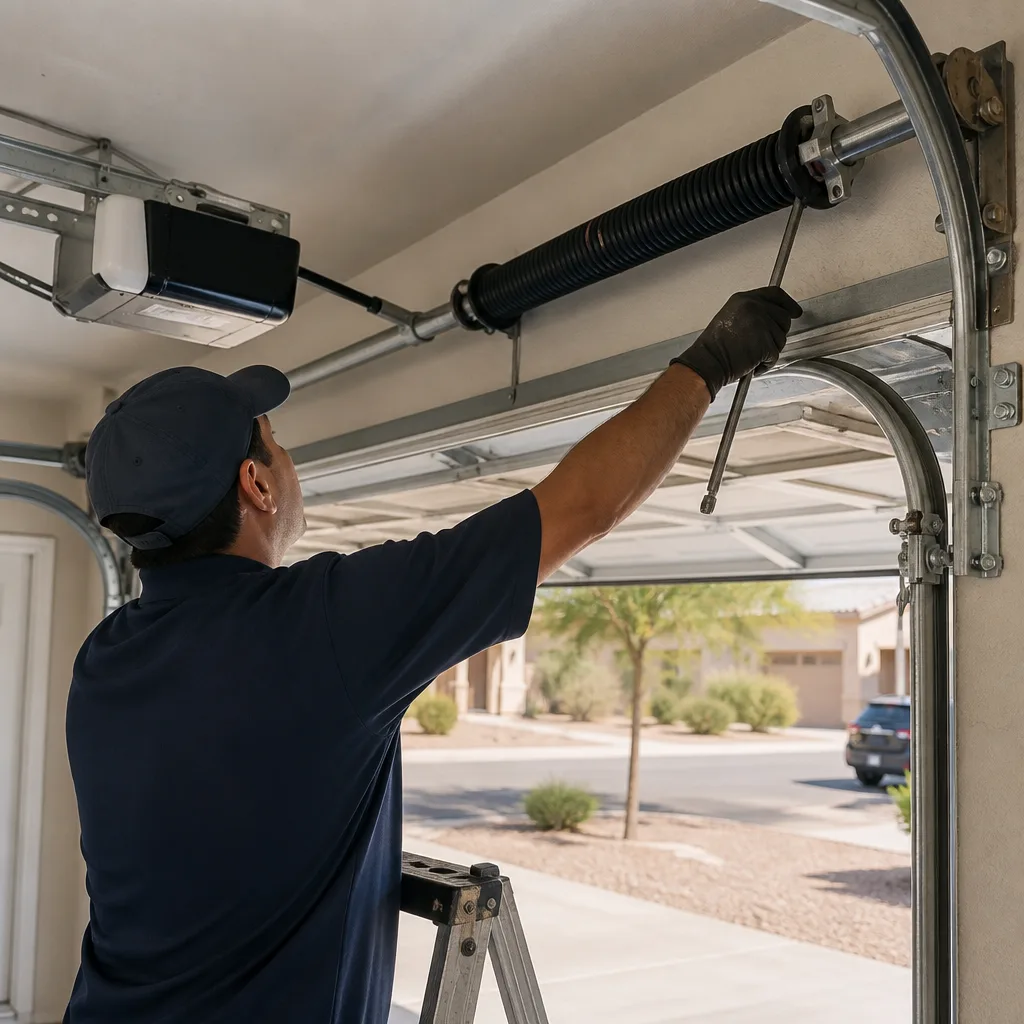
- Spring tension reading. A torsion spring is calibrated to a specific torque setting based on the door’s weight and height. That calibration drifts slightly as the ambient temperature rises, because the spring’s wire diameter expands and its effective torque drops. If your door feels lighter to lift by hand in June than it did in March, the spring set is drifting. The pre-monsoon window is the last safe moment to adjust tension before the heat cycling locks the current setting for the season. After July, adjustments become less predictable because the daily temperature swing between morning and afternoon stresses the spring differently.
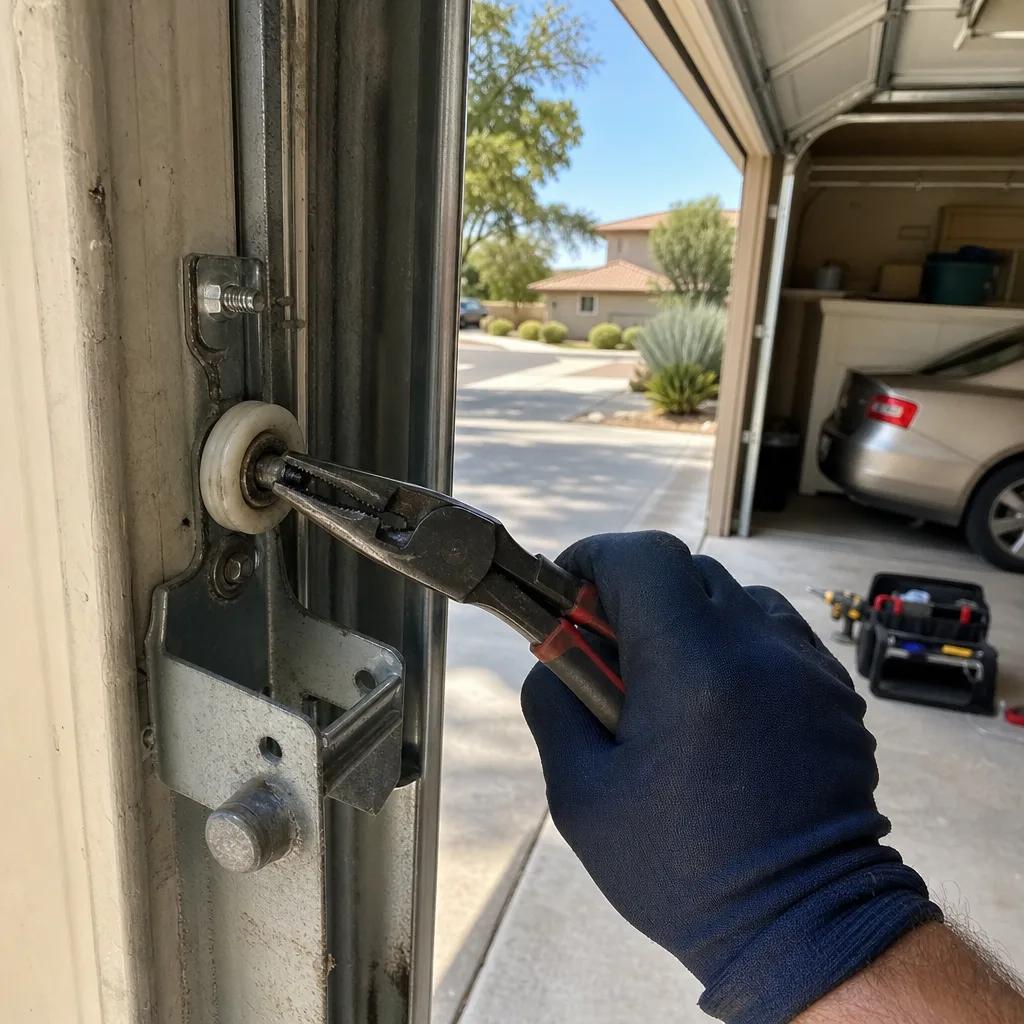
- Roller bearing inspection. Grab each roller stem and try to wiggle it side to side. A roller with a healthy bearing has no lateral play and spins without a scraping sound. A roller that’s been cooking in the Surprise heat since March will often show a dry, gritty spin and slight lateral play. That’s the bearing starting to wear out. Replacing rollers in June costs less than replacing a bent track in August, because a seized roller doesn’t spin - it drags - and that drag is what bends the vertical track over time.
None of these checks requires special tools beyond your hands and eyes. But if you find a cable drum that’s moved, a spring that’s drifted, or a roller that’s worn, that’s the point to call a garage door company in Surprise rather than continuing to operate the door. The pre-monsoon window is a correction window, and corrections get harder every week after it closes.
Monsoon Period (July-September): Particulate, Seal Integrity, and Bearing Wear
A single haboob can put more fine dust on your property than the rest of the year combined. That dust settles into places you can’t reach without disassembly: inside the roller stem, between the track and the roller face, on the opener rail where the trolley carriage rides. The dust isn’t the problem in the moment. The problem is that monsoon moisture makes that dust adhere to everything it touches, and then the next dust storm adds another layer. Two months of that cycle leaves a paste in the bearing surfaces that no amount of spraying the track with a hardware-store lubricant will fix.
Assessing door-to-frame seal integrity after a haboob
After any storm that reduced visibility, walk the perimeter of the door with the garage light on and the door closed. Look for light leaking in around the jamb edges and corners. In Surprise, homes in neighborhoods like Marley Park and Sierra Verde get the same wind loading as the older stock near the original Surprise townsite, but newer builds often have tighter initial tolerances - which means any gap you see is more likely to be real movement, not sloppy original framing.
Check the bottom seal for impacted dust. If you see a line of silt pressed under the door after the water recedes, the seal is no longer making full contact with the floor. That’s not just a dust problem; it’s a pest entry point and a cooling-loss problem for any garage that’s conditioned or used as a workspace.
What fine particulate does to roller bearings over a season
Roller bearings are sealed in most modern doors, but that seal is rated for dust, not for monsoon micro-particulate. The fine clay dust in Surprise storms gets past a standard bearing seal in weeks, not years. Once the dust is inside the bearing race, it acts as an abrasive every time the door moves. The result is a roller that spins with a grinding feel and progressively more friction. That friction adds load to the opener motor, which draws more current, which shortens the life of the opener’s drive gear and logic board. We see a measurable uptick in opener motor replacements in September and October - not because something failed suddenly during a storm, but because the motor worked harder for two months against dust-contaminated bearings.
When to clean versus replace
A roller bearing that spins freely but feels dry can be cleaned and re-lubricated with a light machine oil. A roller that shows any lateral play, grinds, or has visible rust on the stem should be replaced. The same rule applies to hinges: if the hinge barrel has visible dust caking and the joint still moves smoothly, clean it. If it binds, replace it. If the door has twelve rollers and three are shot, replace all twelve. Mixing new and worn rollers on the same door redistributes the load unevenly, and the new rollers just carry the burden the old ones dropped.
For the track itself, use a dry terry-cloth wipe followed by a cloth dampened with mineral spirits. Don’t grease the track - a greased track collects dust faster and turns into grinding paste within a week in this climate. The track is not a lubrication surface; the rollers are the lubrication surface.
Post-Monsoon Reset (October-November): Lubrication, Balance, and Frame Rack
By mid-October, the storms have stopped, the humidity has dropped, and the overnight lows start crossing into the 60s. This is the reset window - the time to undo what the monsoon did and prepare the door for the thermal contraction that starts in December.
Lubrication replacement schedule
The pre-monsoon grease you applied in May is gone by October. It’s been heat-cycled, dust-loaded, and washed by monsoon humidity. Replace it now, while the air is dry and the dust is settled. Use a white lithium grease on the torsion spring coils, a light machine oil on the roller bearings and hinge pins, and nothing on the track. The goal is a thin, even coat - enough to keep metal from touching metal, not enough to drip or sling.
If you’re not sure what the door looked like when it was properly lubricated, this is where a photo log helps. A well-lubricated spring set should show an even, slightly glossy coat with no bare wire visible along the coil. If the spring has surface rust, clean it with a wire brush before applying fresh grease. Surface rust is cosmetic; pitting is structural. Pitting means the spring is near the end of its service life, and a pitted spring should be replaced before it fails.
Spring balance re-check after thermal cycling
Run the balance test: disconnect the opener carriage, manually lift the door to waist height, and let go. A balanced door holds position or moves no more than an inch. A door that drifts up has too much spring tension. A door that drifts down has too little. Run this test in October before the cold nights settle in. What you’re looking for is a mid-point reading - after the monsoon heat, after the cooling trend begins, but before the overnight lows drop into the 40s.
If the door drifts in October, it will feel noticeably heavy by January. The spring loses torque as it contracts, and a marginal balance reading in October becomes an obvious problem in January. Correcting it in October is easier and safer than correcting it in January, when the cold has made the spring wire stiffer and the adjustment less predictable.
How to inspect for frame rack caused by soil movement
Surprise sits on expansive clay in many areas, and monsoon moisture causes measurable soil swelling followed by contraction as the ground dries out in the fall. That movement can rack a garage door frame - meaning the two vertical jambs are no longer parallel, or the header is no longer level. Look for signs of rack: a door that rubs the jamb on one side, a gap that widens and narrows along the top edge, and nail pops in the drywall near the top corners of the garage opening.
Rack shows up after the soil dries in October and November. If you see it, don’t compensate by adjusting the track - the track follows the frame. The fix is to re-shim the track brackets to hold the track plumb and parallel even if the frame has moved, and then to re-check the cable tension on both sides. This is a professional job. Installing new hardware on a racked frame without correcting the track alignment just transfers the stress into the hinges and the spring.
Winter Contraction (December-February): Why Your Door Feels Heavy in January
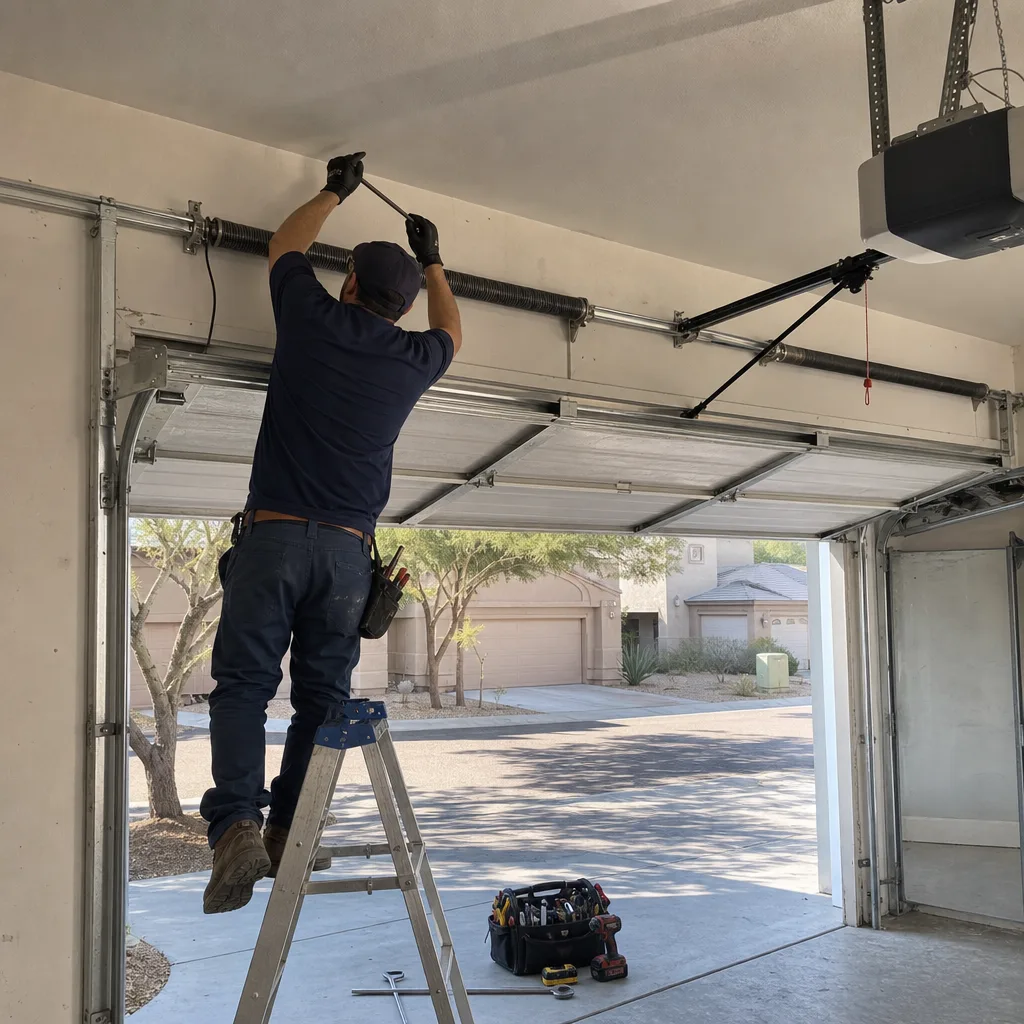
A garage door that balances perfectly in late October can feel heavy by mid-January in Surprise, even though you haven’t touched it. That’s not your imagination, and it’s not a failing spring. It’s thermal contraction. The torsion spring’s wire diameter shrinks fractionally in cold weather, and a shorter, stiffer spring holds less stored energy at the same torsion setting. The effective torque delivered to the lift cables drops by a few percent, and that’s enough to make the door feel noticeably heavier at the manual release.
Surprise’s winter lows - typically in the low 40s overnight, sometimes dipping into the high 30s - aren’t extreme by national standards. But the delta between the July high and the January low is 70 to 80 degrees, and torsion spring calibration is sensitive to that full range. A door that was tuned at 105 degrees will behave differently at 42 degrees. The difference isn’t dramatic, but it’s real, and a homeowner who doesn’t know to expect it will often call us in January convinced something failed.
Here’s how to handle the winter contraction period without making the door worse:
- Don’t adjust the spring yourself in January. Torsion springs are under high tension year-round, but cold wire is more brittle and less cooperative. A do-it-yourself tension adjustment in the cold is a genuinely dangerous proposition. If the door feels heavy in January, note it and run the balance test. If it drifts more than an inch or two, call a professional.
- Re-check the balance only for diagnosis, not correction. The balance test tells you whether the contraction is within the spring’s normal range or whether something else changed. A door that drifts slightly is normal for January. A door that drops two feet when you release it at waist height is not.
- Watch for slow opener movement. Cold weather thickens the grease in the opener rail and the bearing grease in the motor, and the opener works harder in the first 30 seconds of every cycle. You’ll notice it as a slower start and a slight hesitation. That’s usually harmless, but if the opener reverses on its own or trips the thermal overload, the motor is working beyond its intended load - and that’s a sign that the spring isn’t carrying enough of the lift anymore.
The winter window is mostly about not doing the wrong thing. The right thing is to let the door function as designed, note the heavy feel if it appears, and call for a spring re-check if the drift is obvious. Marcus Deller has been doing garage door work in Surprise since 2015, and his advice on winter heavy-door calls is consistent: most of them are thermal contraction, a small percentage are genuinely failing springs, and the only clean way to know the difference is a measured torsion reading and a balance test on-site.
The Year-Round Photo Log: Your Best Tool for Faster Quotes and Zero Disputes
Homeowners who maintain a visual record of their garage door components save themselves money on every repair, because the record eliminates the largest source of friction in any service call: the dispute about what was there before. When a spring fails, the broken spring is the evidence. But when a track is bent, a cable is frayed, or a hinge is wearing, the question “did the technician do that?” comes up constantly. A photo log answers it before it’s asked.
The method is simple. Use your phone, at eye level, with the flash on, every quarter. Shoot the same set of components each time:
- The torsion spring set - one photo showing the entire spring from the center bearing to the end cap on each side.
- The cable drums - one close shot of the left drum and one of the right, showing the cable stack.
- The lift cables - one shot of each cable running down to the bottom bracket.
- The rollers and hinges - one shot of the top roller on each side, and one of the bottom bracket assembly.
- The bottom seal - one shot from inside the garage at floor level, showing the seal contact with the concrete.
- The track alignment - one shot down each vertical track from head height, showing the gap between the track and the door edge.
Six photos, four times a year. That’s the whole system. When you compare a January set to an August set, you’ll see the changes: the spring’s corrosion state, the cable’s fray progress, the seal’s compression, the track’s drift. And when you call for a repair, you’ll have a record that makes the quote faster because the technician knows what the component looked like before the failure.
Servo Garage Doors Surprise takes this same principle into every service call. The documented photo record is part of every visit, not an add-on. Clause 4 of The Haven Standard is the reason our technicians photograph the failed part before quoting a replacement - you see what they see, and you see the completed work when it’s done. That photo record is included on every visit, and it traces back to the rule this company was built on in 2015: the customer sees the failed part before anyone quotes a replacement.
What You Can Safely Do Yourself (and What You Shouldn’t)
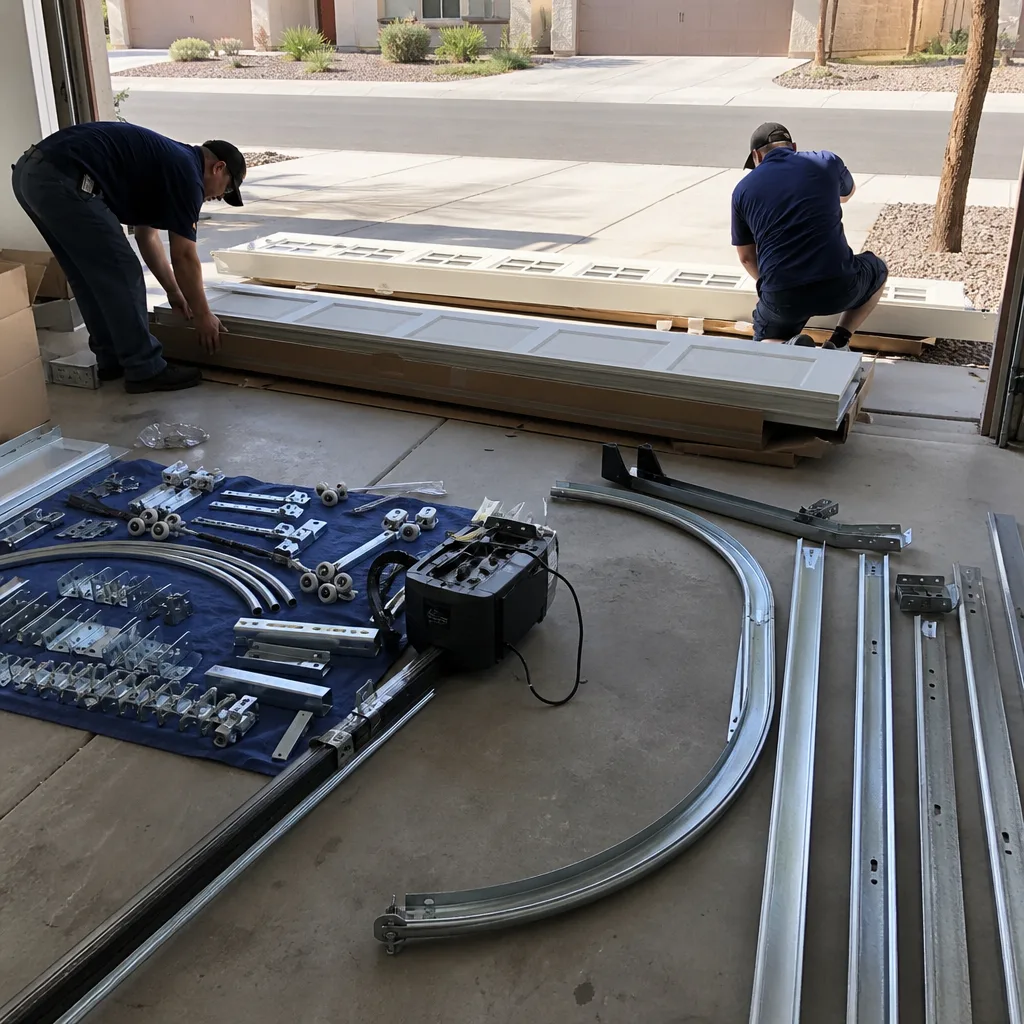
A lot of garage door maintenance is within a homeowner’s reach, and the honest truth is that most doors would last longer if more homeowners did the basic quarterly checks. Not sure which tasks are safe to tackle yourself? See DIY vs Professional Garage Door: The Surprise Homeowner’s Decision Guide. Cleaning, inspection, lubrication, and the balance test are all safe for a person with sound judgment and a willingness to read the manual. But some components deserve a hard line.
- Safe to do: visual inspection, photo log maintenance, track cleaning, roller and hinge lubrication, balance testing, seal inspection, dust removal from the opener rail, sensor lens cleaning.
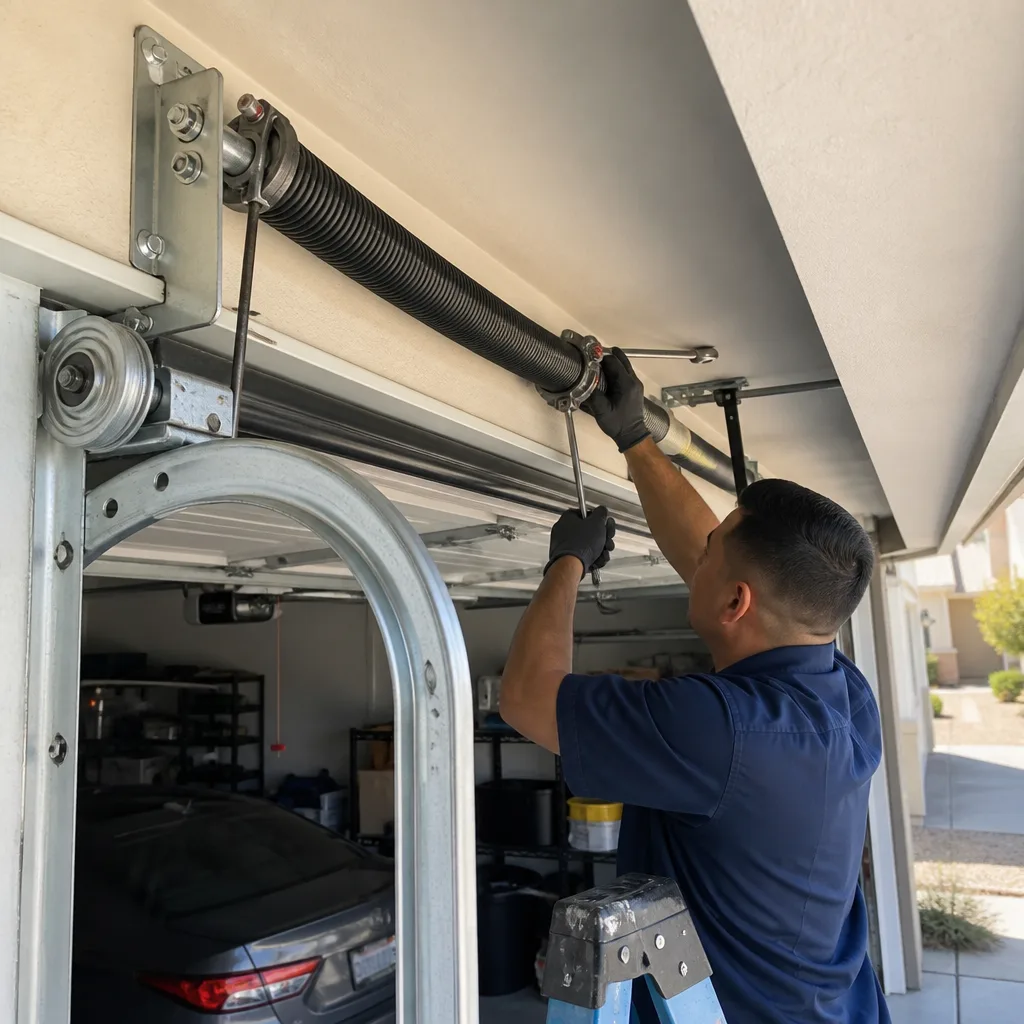
- Not safe to do: torsion spring adjustment or replacement, cable replacement, cable drum re-setting, and any repair that involved a component under tension. Torsion springs store enough energy to cause serious injury or death if the winding bars slip. The cable and drum assembly is under the same tension. Don’t touch them. A trained professional with the right tools and the right procedure can replace a spring set safely in under an hour; a homeowner with a breaker bar and internet confidence can end up in an emergency room. That’s not a hypothetical; it happens every year.
For roller replacement that involves removing the bottom bracket, call a professional too - the bottom bracket is under spring tension through the cable. Anything connected to a cable or a spring is a professional repair, period.
If you’ve been following this guide and catching problems early, call Garage Door Repair in Surprise before a worn component becomes a failed one. The correction windows are May through June and October through November, and a repair scheduled in those windows is cheaper and faster than an emergency call in July or January.
Common Mistakes to Avoid
- Waiting until the door fails to think about it. A torsion spring doesn’t usually fail without warning; it fails after weeks of visible corrosion, paint flaking on the coil, and a door that feels progressively heavier. The warning signs are readable, but only if you look. The July breakdown was visible in May.
- Greasing the track. The track is a guide surface, not a bearing surface. Grease on the track attracts dust in normal conditions and becomes a grinding paste during monsoon season. If your door is noisy, lubricate the rollers and hinges, not the track.
- Lubricating with WD-40 instead of the right product. WD-40 is a water displacer, not a lubricant. It flushes out the grease that was there and leaves a thin film that doesn’t protect anything. Use white lithium grease on springs and a light machine oil on bearings.
- Ignoring a slight balance drift in October. The drift you feel in October is the same drift that feels like a heavy door in January, only amplified by the cold. Small corrections in the fall are cheaper than emergency calls in the winter.
- Spraying a dusty door with water to clean it. Monsoon dust plus water equals concrete. A dry cleanup is the first step; water comes after the dust is off the surfaces, not before. And the opener motor and rail should never get a hose aimed at them.
- Thinking a new door doesn’t need maintenance. A Clopay, Amarr, or Wayne Dalton door installed last year still has springs, rollers, seals, and a balance point. New doors fail from neglect too; they just fail later. The same seasonal schedule applies from day one.
- Not photographing the door before calling for repair. If a technician tells you the track is bent and it was already bent before they arrived, you have no way to know. A photo log from two months earlier settles it in your favor, every time.
When to Call a Professional
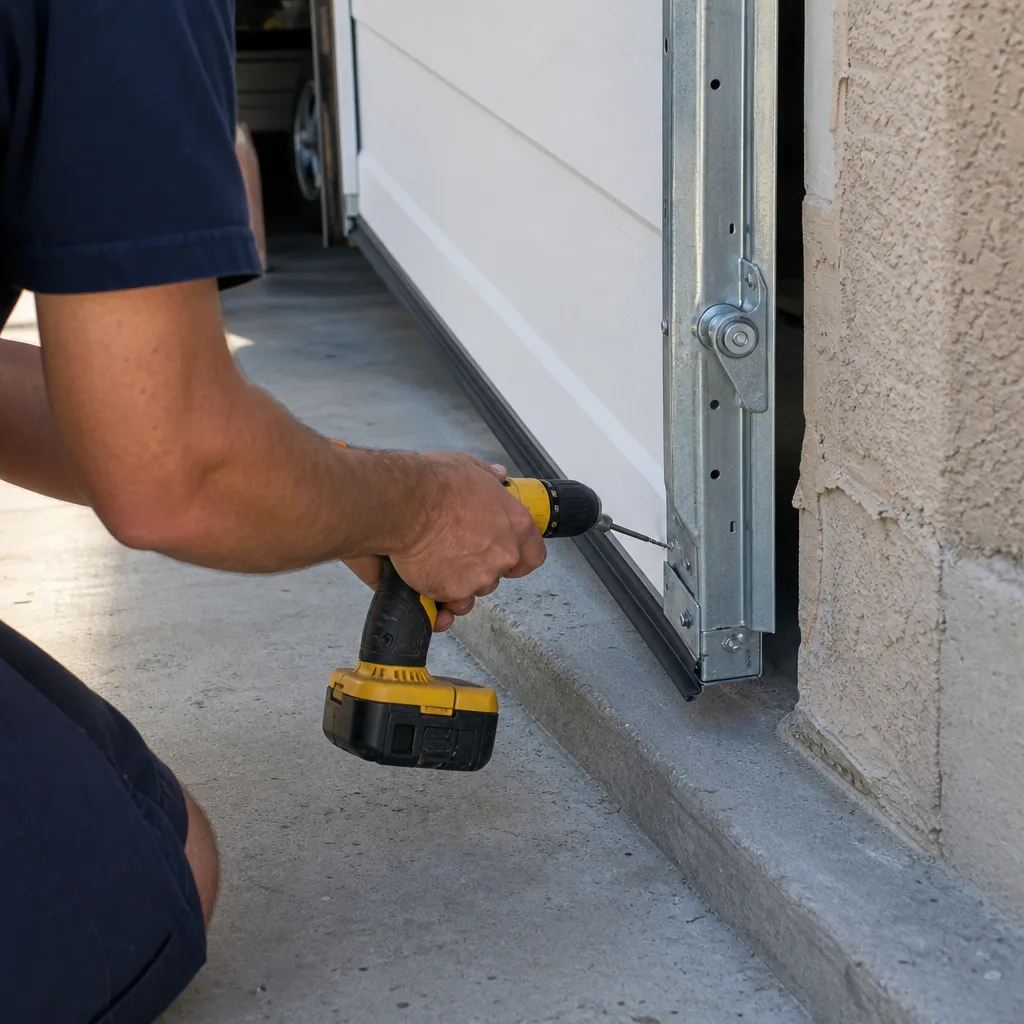
Call a professional when the door feels heavy in a way that wasn’t there the month before, when the balance test shows more than a few inches of drift, when a cable shows visible fraying or a loose wrap on the drum, when a roller is seized or wobbling, or when the opener starts reversing without touching anything. These are all signs that a component is past the point of homeowner-level attention. Catching them early is cheaper than waiting, but the repair itself is not a do-it-yourself job. Servo Garage Doors Surprise offers free estimates in Surprise - call (928) 588-1812 and you’ll get a flat, written price for the full scope before any work begins, per Clause 1 of The Haven Standard.
Frequently Asked Questions
Four times a year, aligned to the local climate: May through June before the monsoon, July through September after storm events, October through November for the post-monsoon reset, and December through February to check winter contraction effects. A door that gets those four touchpoints will outlast a door that gets one annual tune-up year after year. Call (928) 588-1812 if you want a professional assessment before the next season turns.
Thermal contraction. The torsion spring loses effective torque as its wire diameter shrinks in the cold, and a door that balanced perfectly in October will feel heavier in January even if the spring is healthy. Run the balance test to see how much drift you’re dealing with. If the door drops more than a few inches, it’s worth a professional spring check, and estimates are free.
Yes, but do it dry first. Wipe the track faces, the roller stems, and the opener rail with a dry cloth to remove the bulk of the particulate before using anything damp. A light mineral spirits wipe on the track face is fine, but keep liquids away from the opener motor and the rail’s grease points. After the dust is off, check the bottom seal for impacted silt.
Indirectly, yes. Dust that works its way into the roller bearings increases friction, the opener motor works harder to lift the door, and that extra load shortens the life of the opener’s drive gear and logic board. The monsoon doesn’t kill the opener directly; it wears down the bearings and the motor pays the price. If your opener runs slower or reverses on its own during or after monsoon season, that’s a load problem, and it’s worth looking at before the motor fails.
A seasonal garage door inspection and tune-up in Surprise typically runs $75 to $150, depending on what needs lubricating, cleaning, and adjusting. For a full breakdown of what drives those numbers, see Garage Door Cost Breakdown: The Surprise Homeowner’s Reference for 2026. Roller replacement adds roughly $10 to $20 per roller for the part and time. If the door needs spring re-tensioning or cable work, the total climbs accordingly. Servo Garage Doors Surprise quotes a flat, written price before any work starts, so the number you discuss is the number you pay. Call (928) 588-1812 for a specific quote - estimates are free.
Some do. Ours doesn’t. The 24/7 emergency service at Servo Garage Doors Surprise is answered by a live person, not a recording, and the emergency call-out is priced the same way as every other job: a flat, written price before work starts, no upcharge surprise on the invoice. If your door fails during a storm, you’ll get a named technician and an on-the-way text, not a callback window.
The Bottom Line
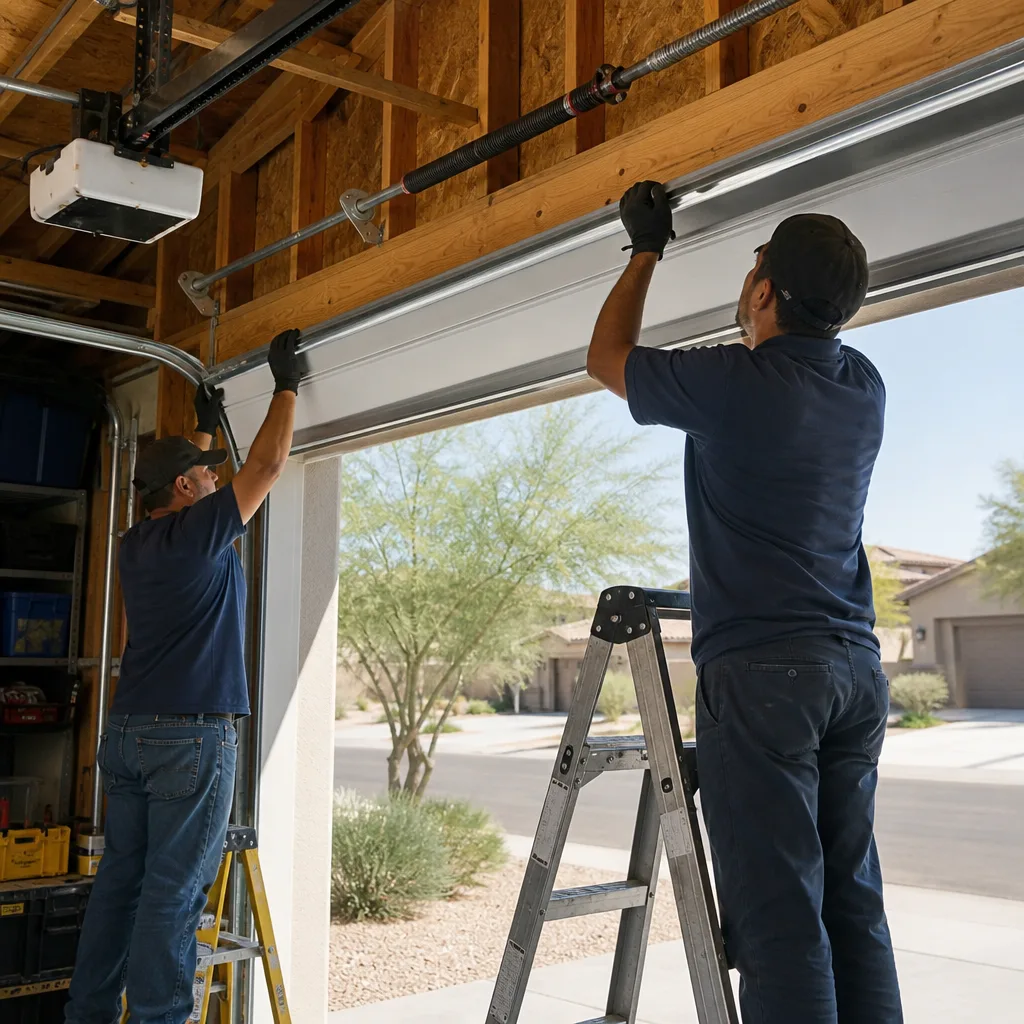
Surprise has a climate that punishes neglected garage doors on a predictable schedule: the pre-monsoon heat, the monsoon particulate, the post-monsoon soil movement, and the winter contraction all leave marks you can read if you know where to look. The fix isn’t more frequent maintenance; it’s correctly timed maintenance. Run the pre-monsoon checks in May and June, clean and assess after haboobs, reset the lubrication and balance in October, and let January be a month for observation, not correction. Keep a photo log so you know what changed and when. And when a component crosses the line from worn to failing, let a professional handle it under tension - the money you save by doing it yourself is not worth the risk of a torsion spring unwinding while your arm is in the way. Servo Garage Doors Surprise home is here for the checks, the corrections, and the full installations - with a written price before any work starts, and a documented photo record when the job is done.
Written by Marcus Deller, Owner at Servo Garage Doors Surprise, serving Surprise since 2015.