
Last updated September 20, 2026
Full 25-point door and opener safety check with every visit - springs, cables, rollers, tracks, and your LiftMaster or Chamberlain opener included
You get a price before we start. It does not change when the truck arrives.
 Before
 After
After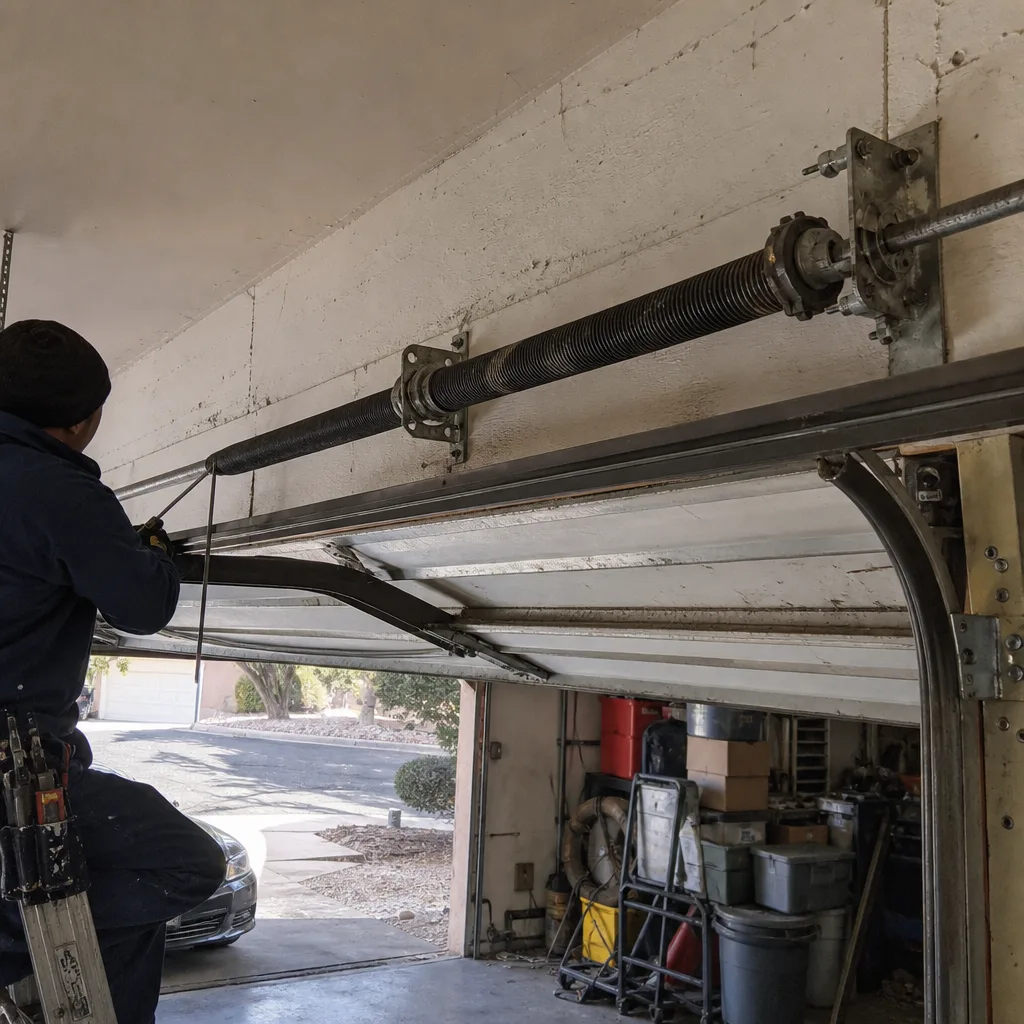 Before
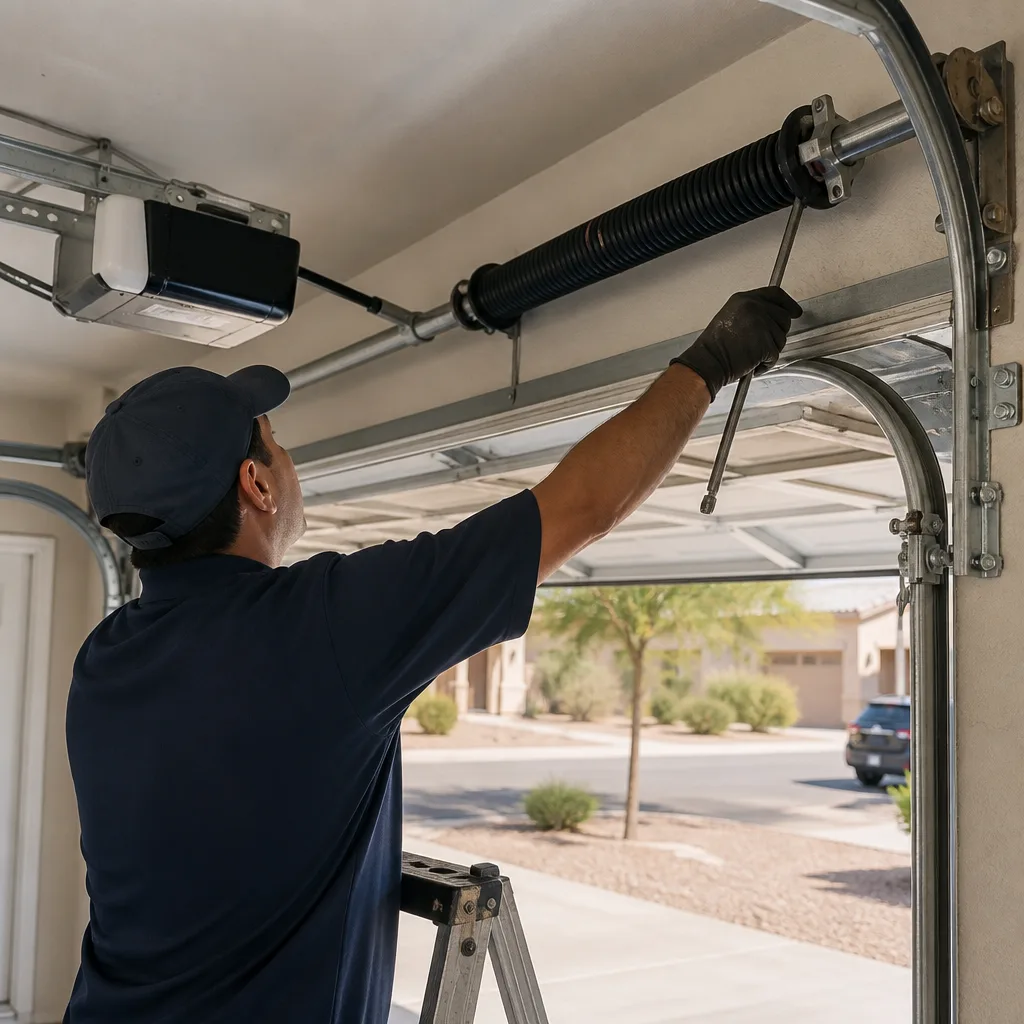 After
After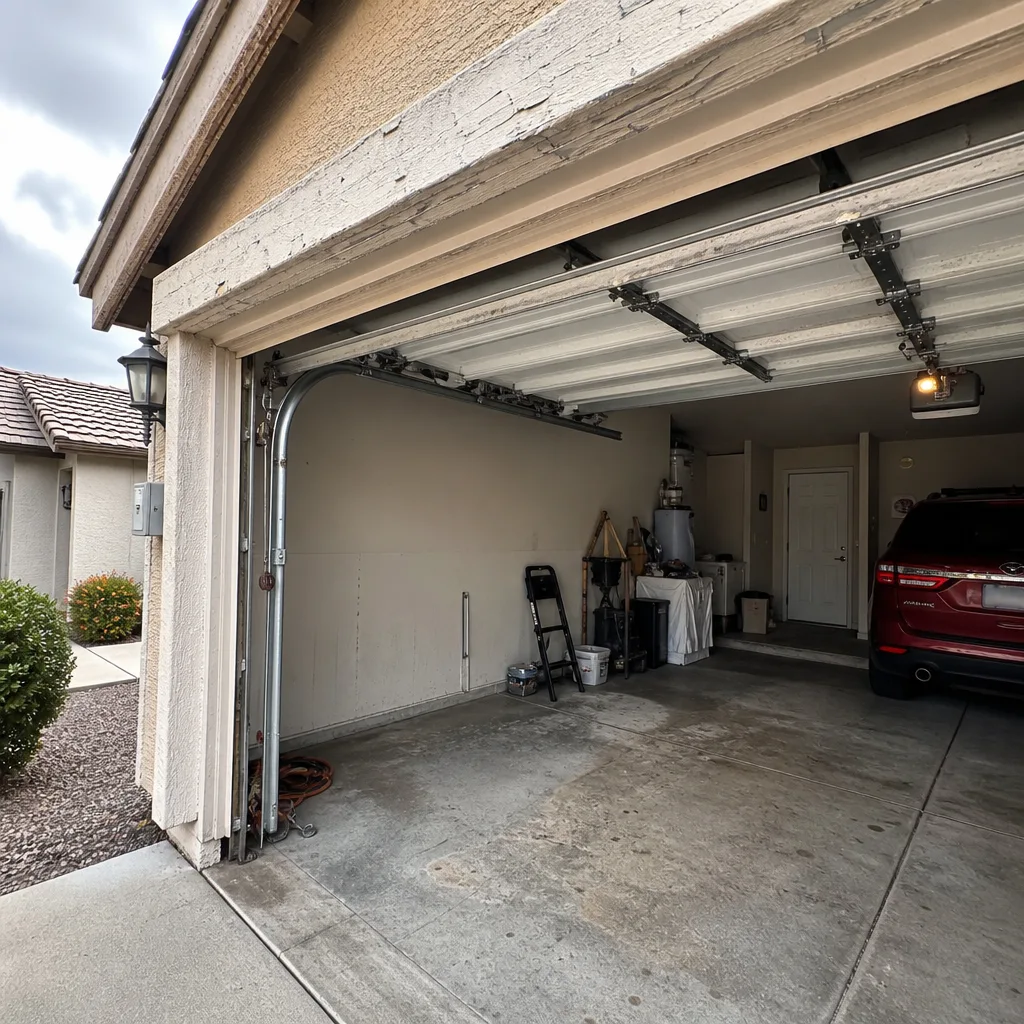 Before
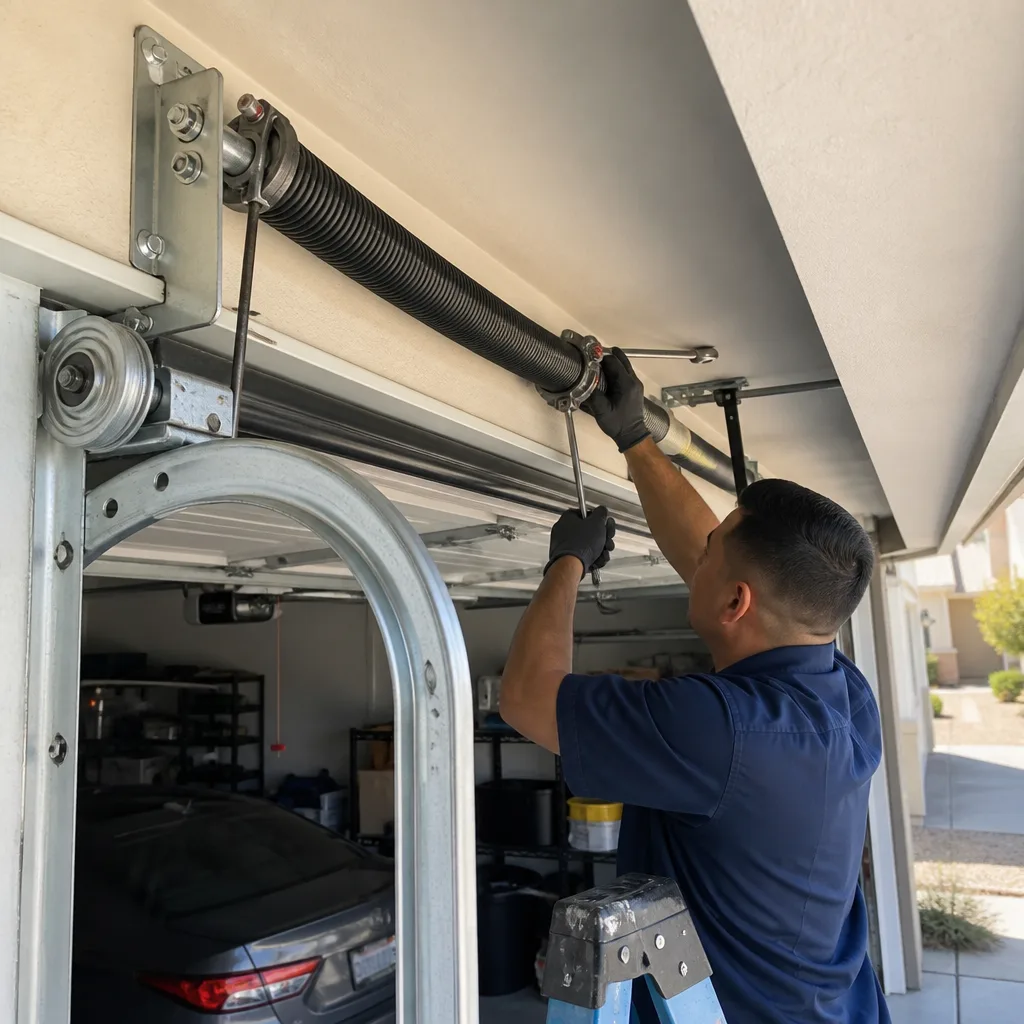 After
AfterGarage Door Permits, Codes & Inspections in AZ: What You Need to Know
Replacing a garage door in Surprise without a permit isn’t usually illegal - until it is. The trigger is structural: if the replacement changes the door’s weight class, spring system type, or header load bearing configuration, Maricopa County building code requires a permit. No contractor is obligated to tell you that proactively. This guide maps the exact permit trigger conditions for Surprise and Maricopa County, walks through what an inspector actually looks at during a garage door inspection, and explains what happens to your homeowner’s insurance claim when unpermitted work is discovered after the fact. We’ve written this for the homeowner who wants the full picture before making a call.
Quick Answer
Most like-for-like garage door replacements in Surprise do not require a permit, but any change to the door’s weight class, spring configuration, or header attachment method triggers a Maricopa County residential building permit. An unpermitted structural modification can give your insurer grounds to deny a claim on adjacent damage years after the work was done. Before you replace a door or buy a home in Surprise, request the permit history on the address from the City of Surprise Development Services Department, and consult our Garage Door Repair Maintenance Checklist for Surprise Homeowners.
Table of Contents
- What Actually Triggers a Garage Door Permit in Maricopa County
- City of Surprise Overlay Requirements That Differ From the County Baseline
- What an Inspector Actually Checks During a Garage Door Inspection
- How Unpermitted Garage Door Work Affects Your Homeowner’s Insurance Claim
- How to Request a Permit History on a Surprise Address
- UL 325 and Auto-Reverse Compliance: The Safety Code Behind the Inspection
- Common Mistakes to Avoid
- When to Call a Professional
- Frequently Asked Questions
- The Bottom Line
BeforeAfterWhat Actually Triggers a Garage Door Permit in Maricopa County
Maricopa County enforces the 2018 International Residential Code (IRC) with local amendments. Under Section R105.1, a permit is required for any work that alters the structural loading of a building component. For garage doors, that means the question is not “am I replacing a door?” but “am I changing what the wall and header have to carry?”
A like-for-like swap - same door weight, same spring type, same header bracket configuration, same track mounting points - falls under ordinary repair and does not require a permit. The moment you change one of the load-bearing variables, you’re in permit territory. Here are the specific triggers we see in Surprise homes built between 2015 and 2025:
- Weight class change: Switching from a steel single-layer door to a wood or insulated double-steel door adds 80 to 180 pounds of dead load on the header. That’s a permit trigger.
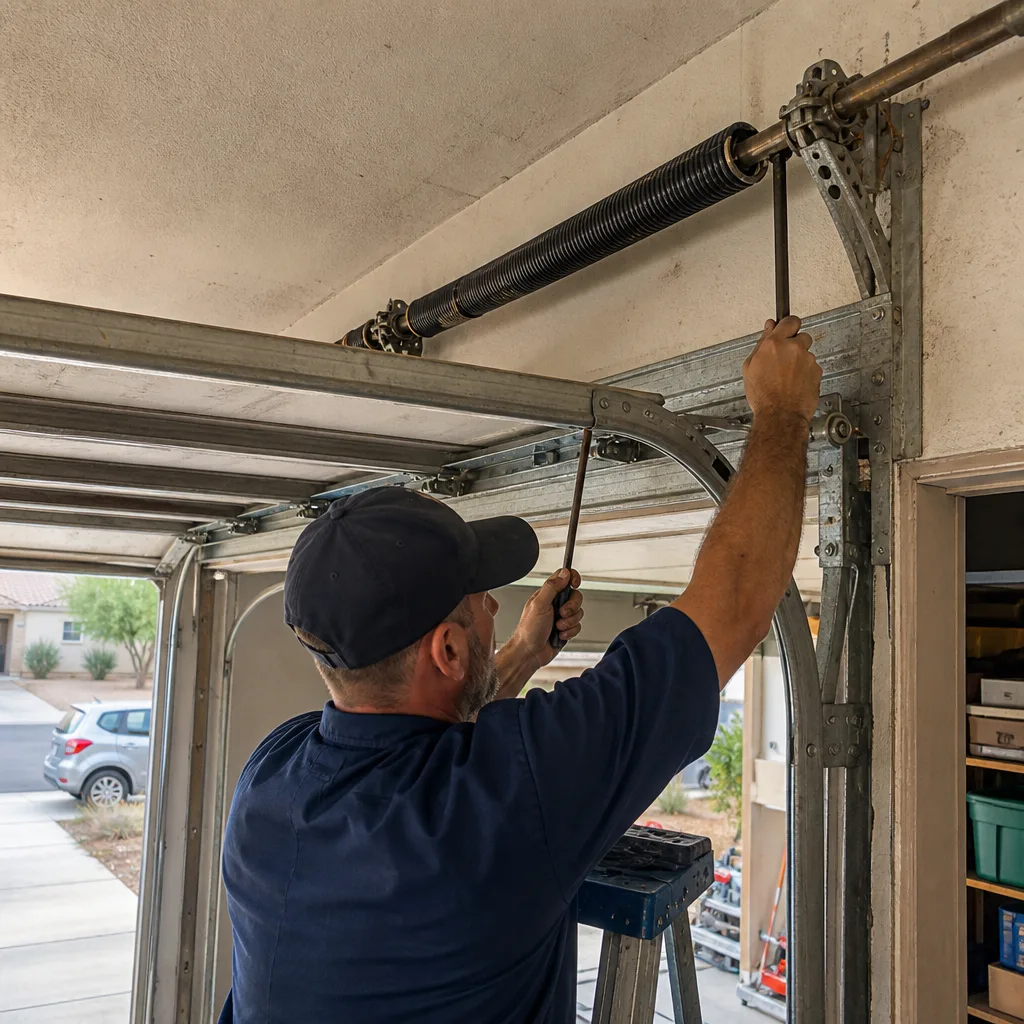
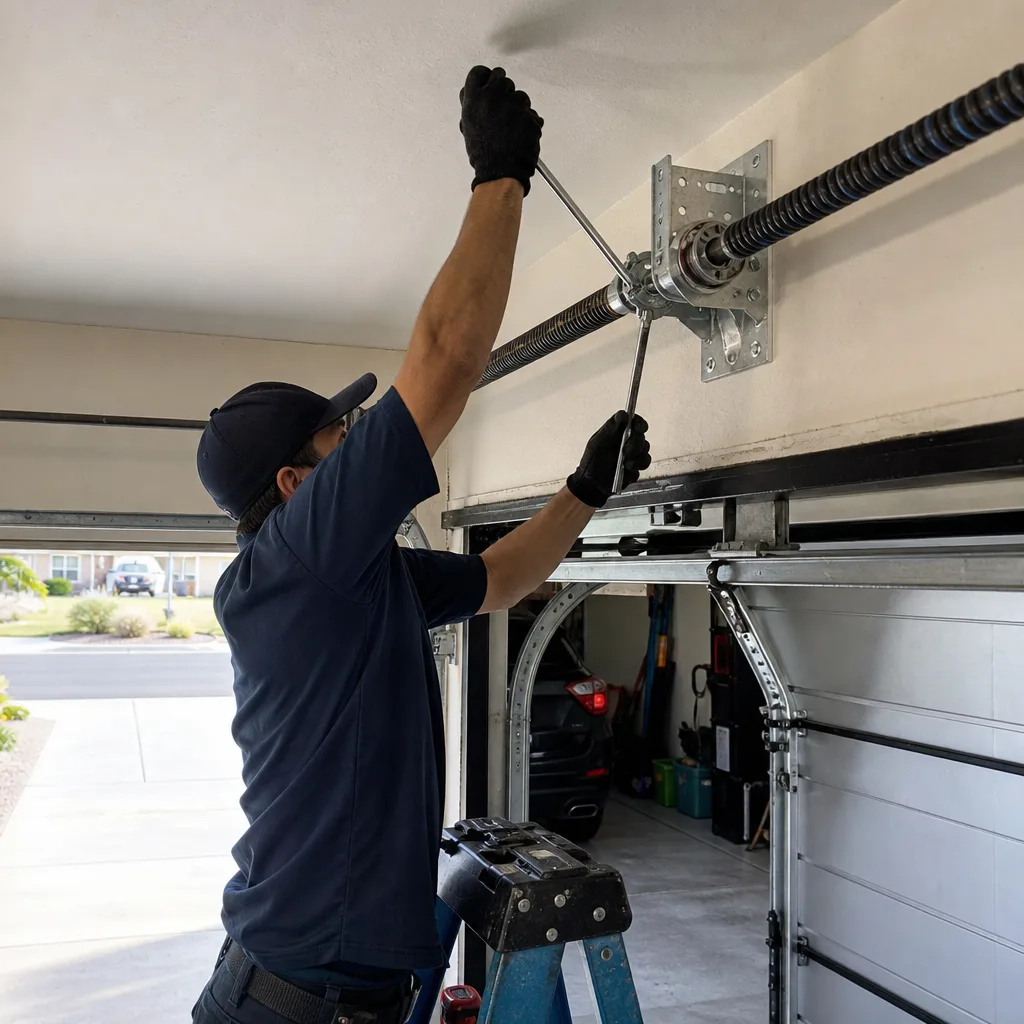
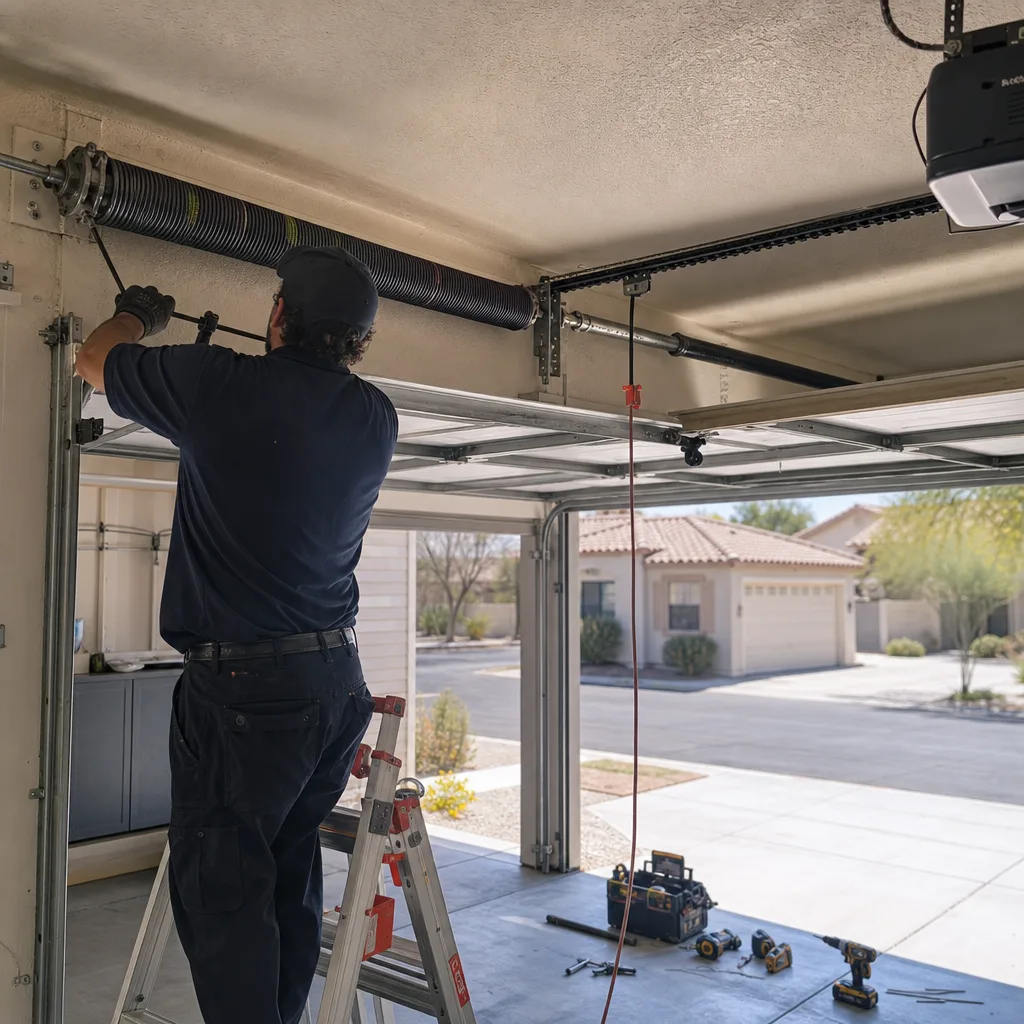
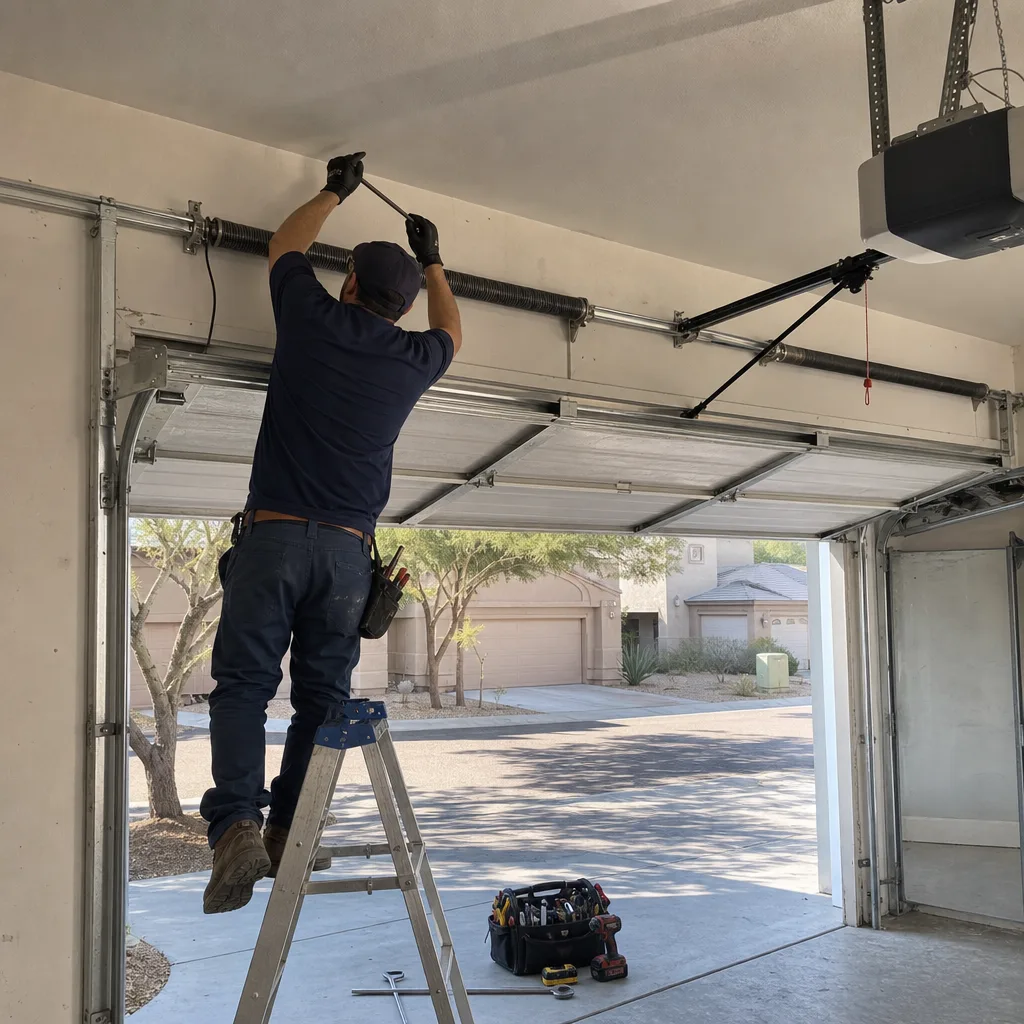
- Spring system type change: Converting from extension springs (the two long springs above the horizontal tracks) to a torsion spring system (the coiled spring on a bar above the door opening) changes the load path through the header bracket and anchor plate. Permitted work.
- Header bracket relocation: If the new door’s torsion spring mounts at a different height or span than the original, the header brackets move. That’s structural. Permit required.
- Opening modification: Widening, raising, or re-framing the garage door opening is always permitted work under IRC Section R105.2, no exceptions.
- Track system conversion: Changing from standard-lift track to high-lift track (common when homeowners add a car lift or raise the ceiling) changes where the door’s weight rests. Permit required.
In our experience documenting garage door work across Surprise neighborhoods from Marley Park to Sierra Montana, the most common unpermitted change we come across is a torsion spring conversion done years ago. The door operates fine for a decade. Then a windstorm tests the header, and the homeowner discovers the anchor plate was mounted with the wrong bolt spec. That discovery is expensive - and it’s the moment the permit question surfaces.
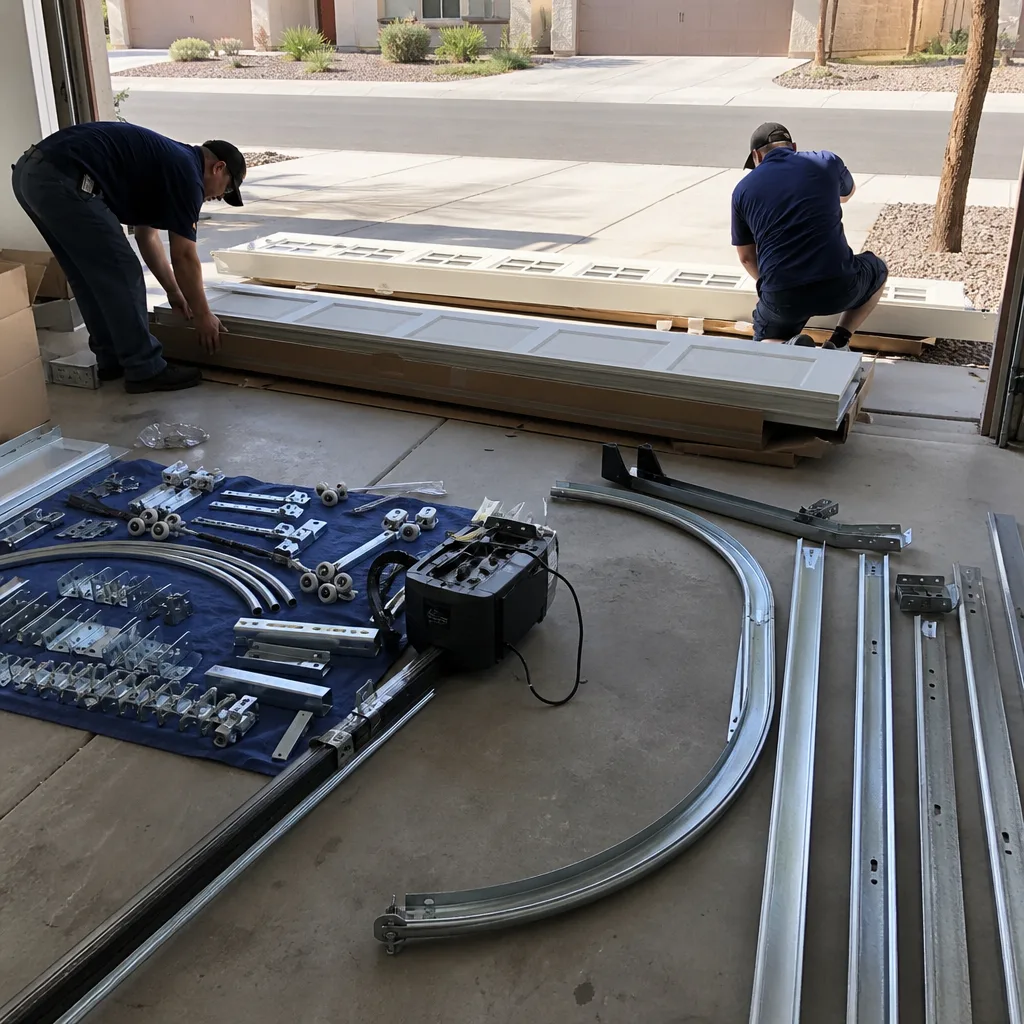
Some of these structural changes accompany a garage door installation in Surprise, while others emerge during a repair when a technician finds the existing setup was never permitted. Either way, the county code treats the trigger the same.
City of Surprise Overlay Requirements That Differ From the County Baseline
The City of Surprise operates its own building division under an intergovernmental agreement with Maricopa County. The county provides the baseline code enforcement; the city adds overlays that apply specifically to neighborhoods built after 2005, especially those within active Community Facilities Districts (CFDs).
Here’s what that means for a garage door replacement in Surprise:
- CFD neighborhoods have architectural review layers: Communities like Asante, Rancho Mercado, and sections of Marley Park have Covenants, Conditions & Restrictions (CC&Rs) that run with the deed. The city doesn’t enforce CC&Rs, but the CFD board can block a door style, material, or color that falls outside the community standard. A permit doesn’t override a CC&R violation, and neither does an HOA approval substitute for a county permit. They’re separate processes.
- Wind load requirements are stricter than county minimums: Surprise sits in a 100 mph wind zone under IRC Figure R301.2(4)A. County baseline permits a 90 mph door assembly in some unincorporated areas. Surprise requires the manufacturer’s wind-load certification sticker on the new door before final inspection sign-off.
- Contractor registration is checked at permit issuance: The City of Surprise verifies that the pulling contractor holds an active Arizona Registrar of Contractors license with a C-8 or B-1 specialty classification. If a homeowner pulls the permit as owner-builder, the city records that on the property file - which matters for insurance, a point we’ll return to.
- New construction neighborhoods built since 2018 may have digital permit files: The city migrated to a digital permitting system for permits issued after January 2018. Older records are on microfiche and take a week to retrieve. Worth knowing before you close on a home.
The practical takeaway: in Surprise, you need to check two things before a structural garage door replacement - the county permit requirement and the city overlay. Neither one checks the other for you.
What an Inspector Actually Checks During a Garage Door Inspection
A Maricopa County garage door inspection is not a walk-through with a clipboard. The inspector is checking specific code sections against your filed plans. If you know what they’re looking for, you’ll understand why the permit exists in the first place.
Here’s the inspection checklist in order, based on what Surprise field inspectors review:
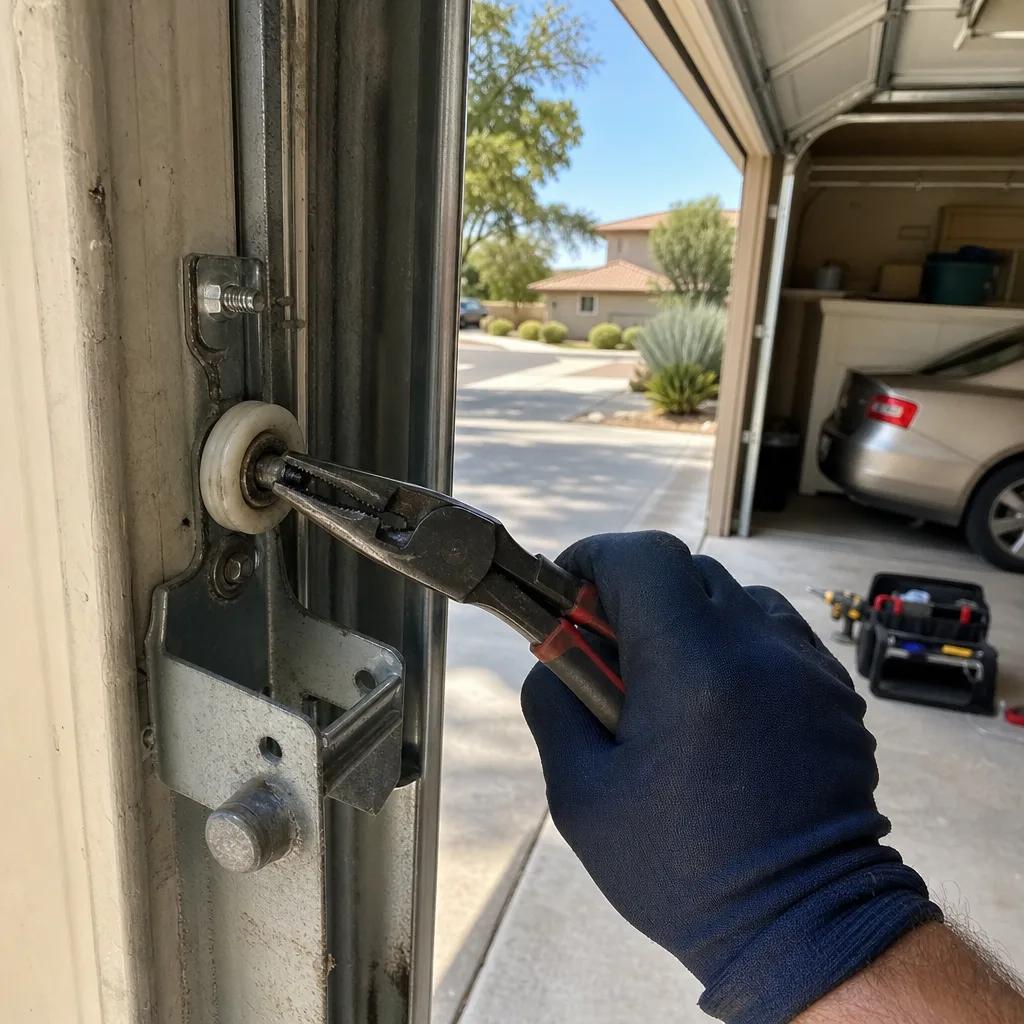
- Spring anchor plate attachment (IRC Section R301.2.2.1): The inspector verifies the torsion spring anchor plate is mounted to the header with the specified bolt pattern - typically two 5/16-inch x 2-inch lag bolts into solid framing, not drywall anchors, not deck screws. This is the single most-failed item in remodel inspections.
- Header bracket bolt spec (IRC Section R603.2): The bracket securing the spring assembly to the header must be fastened to a load-bearing member. If the original framing was altered, the inspector checks for a note from a structural engineer. Surprise inspectors flag this on any conversion from extension to torsion springs.
- Auto-reverse compliance under UL 325 (IRC Section R309.4): The inspector places a 2×4 on the floor and closes the door. The door must reverse within two seconds of contact. This is a national safety standard and the most common failure on doors older than five years.
- Photoelectric sensor placement: The sensors on either side of the door must be mounted no higher than 6 inches off the floor and must trigger reversal when the beam is interrupted during descent.
- Wind-load certification sticker: The inspector looks for the manufacturer’s certification label on the door panel verifying the assembly is rated for the Surprise wind zone. No sticker, no pass.
- Emergency release functionality: The red manual release cord must disengage the opener from the door. If the door is difficult to lift manually after release, the springs are improperly balanced - a safety issue.
At our garage door repair work in Surprise, we document every one of these points in the photo record we leave with the homeowner. Clause 4 of The Haven Standard requires the technician to photograph the failed component before quoting a replacement - and when a repair touches any of these inspection points, the customer sees the before and after. That photo record becomes useful if a future permit inspection or insurance claim asks what work was actually done.
How Unpermitted Garage Door Work Affects Your Homeowner’s Insurance Claim
Here’s the part most Garage Door Warning Signs: A Surprise Homeowner’s Reference Guide never fully cover: the permit question doesn’t disappear when the door is installed. It resurfaces when something else goes wrong.
Standard homeowners policies in Arizona contain a concealment or misrepresentation clause. In plain language, it says the insurer can deny a claim if the property contains unpermitted work that would have changed their underwriting decision. A garage door itself rarely prompts an insurance claim. But consider what happens when the garage roof leaks, the exterior wall cracks, or a monsoon storm blows debris through the door opening and damages the structure.
If the adjuster finds that the garage door was replaced without a permit - and that replacement changed the structural loading - the insurer can argue the damage is connected. Not that the door caused the leak, but that the unpermitted modification means the property is no longer as described in the policy. The claim gets denied. The homeowner fights it. Sometimes they win after months and an attorney. Usually they don’t.
This is not a hypothetical pattern. In our work across Surprise since 2015, we’ve been called to document door conditions for homeowners who were already in this position with their carrier. The request is always the same: “Can you give me something in writing about when this door was installed and whether it was permitted?” If the previous work was done by a contractor who didn’t pull a permit, the answer is often that no record exists. That absence becomes the insurer’s evidence.
Owner-builder permits create a different exposure. When a homeowner pulls their own permit, the city records it on the property file. Some insurers treat an owner-builder permit as a signal that the work may not have been inspected by the same standard as a licensed contractor’s job. Whether that’s fair is beside the point. It’s in the file, and the underwriter reads the file.
How to Request a Permit History on a Surprise Address
You can pull the permit history on any Surprise address in about fifteen minutes. Most homeowners never think to do this before buying a home or hiring a contractor - and it’s the single most useful pre-purchase check most buyers skip. See also How to Hire a Garage Door Contractor in Surprise: A Step-by-Step Guide.
Here’s the step-by-step process:
- Go to the City of Surprise Development Services Department permit portal: The city’s e-permitting system covers permits issued after January 2018. You can search by address or parcel number without creating an account.
- Search the property address: Enter the street address exactly as it appears on the Maricopa County Assessor’s site. Pull the parcel number first if the street name is abbreviated differently in the city system.
- Review the permit list: You’re looking for any permit whose description mentions “garage door,” “overhead door,” or “structural alteration.” A missing permit on a prior door replacement is a red flag - it usually means the work was done without one, and whatever is behind the wall has never been inspected.
- Request older records: For permits issued between 2005 and 2018, submit a public records request through the City Clerk’s office. Surprise typically processes these within seven business days. Microfiche records from before 2005 take longer.
- File the records: Save a PDF of every permit attached to the address. Include it in the closing documents if you’re buying. If you’re the seller, it’s a point of value at sale.
Before we begin any structural garage door opener or structural door work in Surprise, we recommend the homeowner pull this history. If the previous replacement was never permitted, the new permit application may expose it - and that’s better discovered before the inspector arrives than during the inspection. Marcus Deller, our owner, has walked more than a few Surprise homeowners through this exact sequence. The conversation is always clearer when the paper trail exists.
UL 325 and Auto-Reverse Compliance: The Safety Code Behind the Inspection
UL 325 is the national safety standard for garage door openers and operators, adopted into the IRC by reference. It’s the reason every garage door installed since 1993 requires an auto-reverse mechanism. The standard is not about the door itself - it’s about what happens when a door meets an obstruction, and whether the system fails safe.
Here’s what UL 325 compliance actually requires in a Surprise garage:
- Contact reversal: The door must reverse when it encounters a 2×4 laid flat on the ground during closing. The reversal must happen before the door crushes the board, and the test must be repeated monthly by the homeowner.
- Photoelectric sensors: Two sensors, one on each side of the opening, must project an invisible beam across the door path. Break the beam while the door is closing, and the door must reverse. Sensors must be mounted no more than 6 inches above the floor.
- Force settings: The opener’s closing force must be set so the door cannot exert more than 15 pounds of downward pressure before reversing. A technician uses a force gauge to verify this. We adjust force settings on nearly every opener we service - most are set too high from the factory.
- Manual release access: The red cord must be reachable from the floor and must disengage the door from the opener carriage in one pull. If the spring system is not balanced, the door drops or rises on its own after release - an immediate safety fail.
- Assuming all garage door work is permit-exempt: In Maricopa County, a structural change to weight class, spring system, or header configuration requires a permit. A contractor who says “nobody pulls permits for garage doors in Surprise” is telling you something about their own process, not the code.
- Pulling an owner-builder permit to save the contractor fee: It may save $200 today, but it goes on the permanent property record and can complicate insurance claims later. If a contractor asks you to pull the permit in your name, ask why they won’t stand behind their own work.
- Trusting an HOA approval as a substitute for a permit: CC&R review and building permits are separate regimes. Marley Park and Rancho Mercado HOAs both require architectural review - and neither filing satisfies Maricopa County. You need both, or you need to know which one applies to your specific change.
- Reusing the old spring system on a new door: If you replace a door with a heavier panel and keep the old springs, the springs are undersized. The door hangs unevenly, the opener strains, and the header load was never recalculated. This is a common unpermitted modification we find in Surprise homes where a previous contractor cut corners.
- Not checking the permit history before buying: Surprise homes built in the 2015-2025 wave are young enough that any prior garage door work should still be in the city’s digital system. A missing permit tells you the work was done off the books - and that’s a negotiating point or a walk-away signal.
- Waiting until the door fails to think about permits: When a torsion spring breaks at 7 p.m. on a Sunday, the conversation is about getting the car out. The structural conversation happens later. But if the replacement requires a permit and the emergency repair is done without one, you’re exposed. A Servo Garage Doors Surprise home visit always includes the permit conversation before the repair changes anything structural - even at midnight.
Brands respond to UL 325 differently in their opener designs. A Raynor opener, for example, places the force-sensing module inside the motor housing, while a LiftMaster typically uses an external logic board that reads sensor input before every cycle. The code doesn’t care which brand you choose. It cares that the tested behavior meets the standard. When we install a new opener in a Surprise home, we test all four points above on video and include the clip in the documented photo record the homeowner receives. That documentation matters - if a future inspection asks whether the auto-reverse was verified at installation, the answer is on file, not on someone’s memory.
Common Mistakes to Avoid
When to Call a Professional
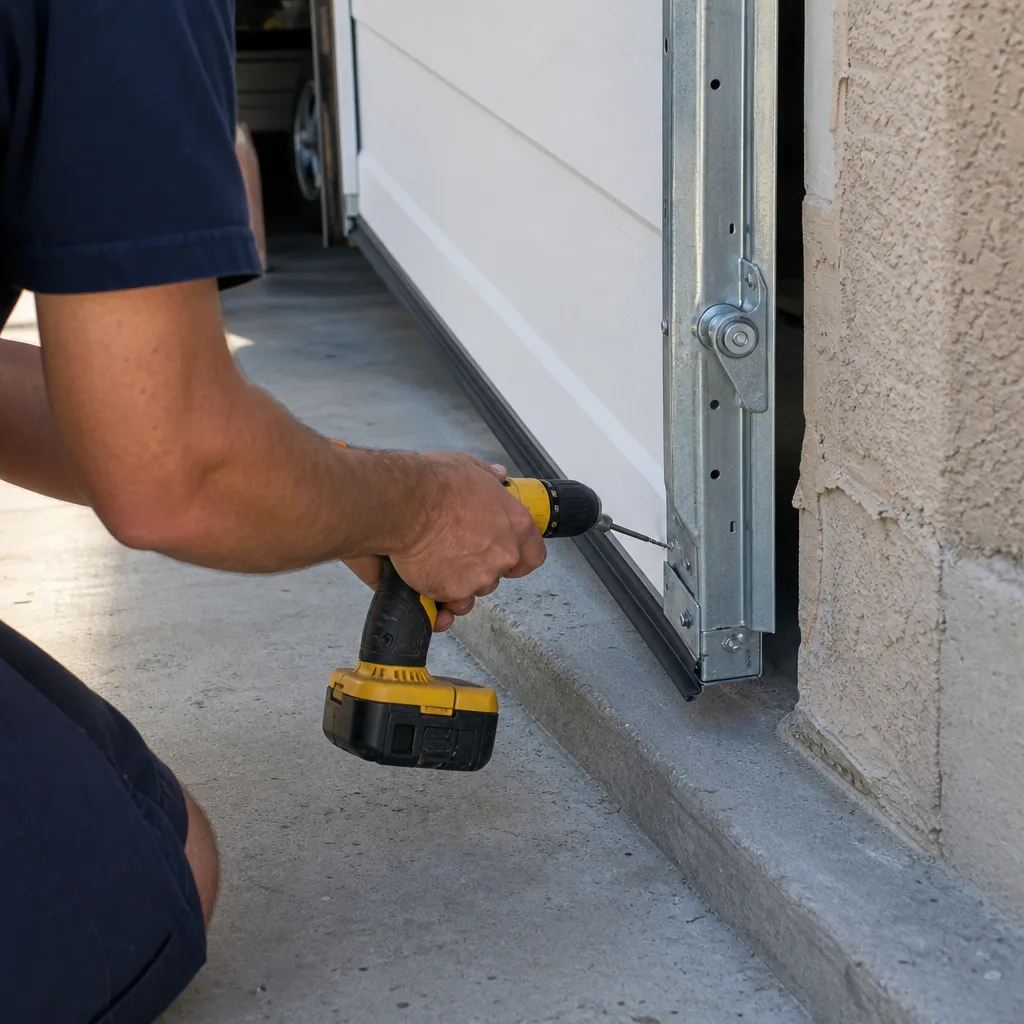
Some garage door work is genuinely homeowner-level: tightening hinge bolts, replacing remote batteries, clearing debris from the track. The permit question doesn’t enter. But these situations call for a trained technician, and most of them involve the structural or safety points in this guide: torsion spring failure, header bracket pulling away from the framing, door replacement that changes weight class, opener force settings out of spec, or any situation where you need documentation for an insurance claim. A torsion spring under tension stores enough energy to cause serious injury if released incorrectly. This is not a DIY component. When in doubt, call someone who can name the part, quote the dollar range before touching anything, and leave you with a paper trail. Servo Garage Doors Surprise offers free estimates in Surprise - call (928) 588-1812.
Frequently Asked Questions
You do not need a permit for a like-for-like replacement that keeps the same door weight, spring type, and header configuration, but you do need a permit if any of those three factors change. Maricopa County treats weight class changes, torsion spring conversions, and header bracket relocations as structural work under IRC Section R105.1. Call (928) 588-1812 and we’ll tell you which category your replacement falls into before you spend a dollar.
A residential garage door permit in Maricopa County typically runs between $120 and $250 depending on the scope of the structural change, and the City of Surprise may add an administrative review fee. The exact amount depends on the valuation of the work filed with the permit application. We can quote the permit cost as part of your written scope before any work begins.
Insurers can deny a claim on adjacent or related damage if they find unpermitted structural work that would have changed their underwriting decision, even if the unpermitted door itself didn’t cause the damage. The policy language is in the concealment clause, and Arizona courts have generally upheld denial when the insurer can show the property was not as described in the policy. Request your permit history before you buy.
A straightforward structural garage door permit in Surprise typically takes five to ten business days from filing to approval, assuming the plans are complete and the contractor’s license checks out. Complex cases requiring structural engineering review take longer. The inspection itself is scheduled after installation and usually happens within one to two weeks of the request.
Surprise sits in a 100 mph wind zone under IRC Figure R301.2(4)A, so the replacement door assembly must carry a manufacturer’s wind-load certification sticker for that zone or higher. A door rated for 90 mph won’t pass a Surprise inspection. We verify the certification sticker on every door we install in the area and photograph it for your file.
Yes, a field inspector can flag prior unpermitted work during a new permit inspection, particularly if the old modification is visible in the spring assembly or header area. Anything secured with deck screws instead of lag bolts, or any torsion conversion without an engineer’s note, is an immediate red flag. The time to find out is before you file the new permit, not during the inspection.
The Bottom Line
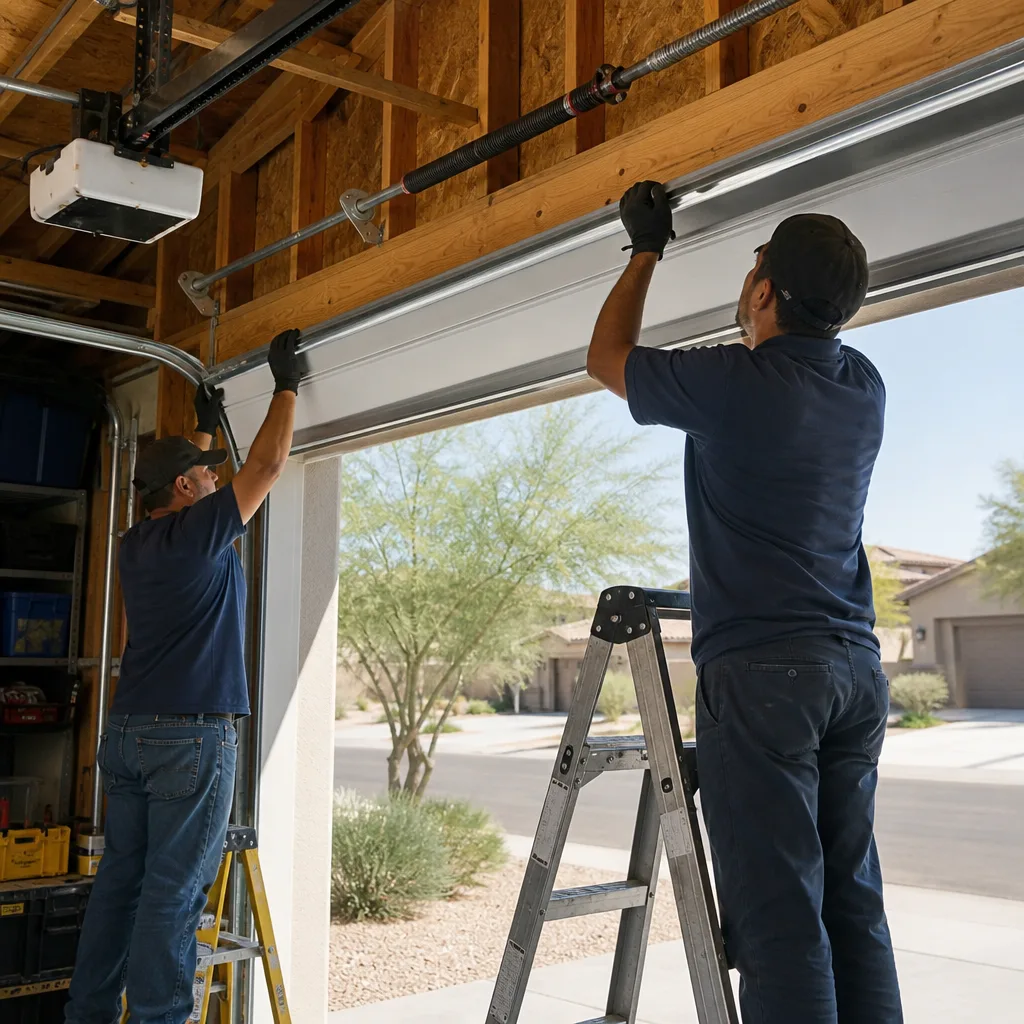
The rule is simpler than most Surprise homeowners fear: if you’re swapping a garage door for one that weighs the same and mounts the same, there’s no permit. For more guides & resources, visit our blog. If you’re changing what the wall carries, there is. The risk isn’t the permit fee - it’s the insurance conversation that surfaces when a claim gets filed and the permit history comes up empty. A Wayne Dalton door replacement or an Amarr conversion doesn’t need to be caught the day it’s installed. It needs to be discovered the day you file a claim or sell the house. Pull the permit history on any Surprise address before you buy. And when a contractor tells you permits don’t matter for garage doors, find a different contractor. The written record, filed with the city, is the entire point.
Written by Marcus Deller, Owner at Servo Garage Doors Surprise, serving Surprise since 2015.